In the world of electronic technology, various components and devices play essential roles. As the demand for data in modern data centers continues to rise, an increasing number of devices and cables are being used. Among these, the Cat6 slim cable has become a popular choice for addressing specific networking challenges. In this article, COBTEL will guide you through everything you need to know about the Cat6 slim cable. Is the Cat6 slim cable always the best choice? Let's get started!
1. What Are Patch Cables?
Before diving deeper, let's first briefly explain what a
patch cable is. If you're already familiar with the concept, feel free to skip this section.
A
patch cable is a type of cable used to connect networking devices such as computers, servers,
ethernet switches, routers, network cameras, and telephones to enable the transmission of data signals within local area networks (LANs) or wide area networks (WANs). These cables are usually made from
twisted pair wiring and feature standard connectors like RJ-45 or RJ-11 that fit into network device ports.
1.1 What Do Patch Cables Do?
Patch cables serve several important functions:
Connecting Devices: They link network ports on different devices, enabling communication and data exchange between them.
Transmitting Data: They carry digital signals such as network data, voice communications, and video signals for seamless information transfer.
Simplifying Network Cable Management: By allowing easy reconnections or reconfigurations through cable replacement, patch cables make managing network setups more flexible and convenient.
1.2 Types of Patch Cables
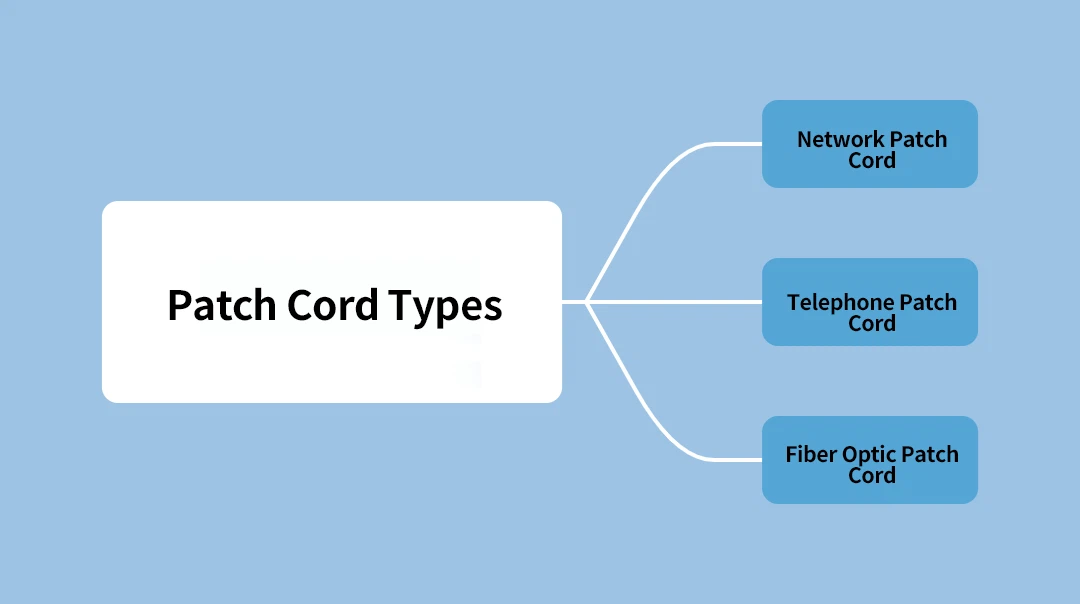
Patch cables come in various types designed for specific purposes:
Ethernet Patch Cable: Used to connect networking equipment like computers, switches, and routers; these are typically made from
twisted pair wiring and adhere to standards such as
Cat5e, Cat6, Cat6a, or
Cat7.
Telephone Patch Cable: Commonly used for connecting telephones or fax machines; they usually feature RJ-11 connectors.
Fiber Optic Patch Cable: Designed for high-speed data transmission over long distances; these cables come with various connector types like LC, SC, or ST.
Patch cable lengths can be customized based on need and are often available in standard sizes such as 1m, 3m, or 5m to accommodate different cabling requirements.
2. What is a Cat6 slim cable?
Cat6 Slim cables are specially designed network cables typically used for connecting networking devices like servers, switches, or routers to facilitate data transmission. Unlike standard patch cables, slim versions have a smaller diameter-often using 28 AWG (American Wire Gauge) wiring-making them softer and more flexible for unique cabling scenarios.
2.1 Features and Uses of the Cat6 slim cable
The Cat6 slim cable offers several distinct advantages:
Smaller Diameter: With their reduced thickness compared to standard cables, Cat6 slim cables are easier to bend and route-ideal for tight spaces.
High-Density Cabling: They are perfect for high-density environments like data centers where they reduce cable clutter and improve airflow within
rack cabinets.
Flexibility: Their pliable nature allows them to adapt easily to compact installations.
Short-Distance Connections: Best suited for short-range applications such as connecting equipment within
server racks or between adjacent
network racks.
Ease of Maintenance: Their lightweight design simplifies maintenance tasks like replacing or adjusting connections.
2.2 Drawbacks of the Cat6 slim cable
Despite their advantages in certain environments,the
Cat6 slim cable also comes with some limitations:
Higher DC Resistance: Their smaller diameter leads to increased direct current resistance which can reduce signal performance over longer distances.
Greater Insertion Loss: Compared to standard patch cables, slim ones may experience higher energy loss during signal transmission-potentially impacting high-speed or high-bandwidth applications.
Connection Stability Issues: Their thinner design may result in less stable connections if not properly handled during installation or frequent plug-and-play usage.
Safety Concerns: While compliant products are generally safe to use, poor-quality Cat6 slim cables could pose overheating risks due to insufficient copper conductor thickness.
Reliability Factors: The overall reliability depends heavily on manufacturing quality and proper installation practices.
3. Cat6 slim Cable vs Standard Cat6 Cable
While both types share the same primary purpose-connecting network equipment-they differ significantly in design and suitability depending on usage scenarios:
Cable Diameter: The Cat6 slim cable features thinner diameters (e.g., 28 AWG), making them softer and more flexible than standard ones (typically 24 AWG).
High-Density Applications: Thanks to their compact form factor, slim Cat 6 excel in crowded environments by reducing clutter and improving cabinet airflow.
Use Cases: Ideal for short-distance connections within server rooms; however, standard patch cables remain better suited for long-distance cabling needs.
Signal Transmission Performance: Thinner wires may compromise signal integrity over longer distances compared to thicker standard options.
4. Considerations for Using The cat6 Slim Cable with PoE
When deploying Power over Ethernet (PoE) alongside Cat6 slim cables:
Power Requirements: Slim patch cords are typically suitable for low-power PoE transmission, such as PoE Type 2, with a power transmission limit of around 30W or below. This makes them ideal for powering low-power devices like IP cameras and VoIP phones. For devices that need higher power, like some wireless access points or surveillance cameras, you might need standard patch cords since they can handle greater power transmission.
Cable Length: Slim patch cords are generally used for short-distance connections, which means they are typically shorter in length. PoE power supply distance is usually affected by current and resistance. Therefore, you should make sure the power supply distance isn't too long to prevent power loss or voltage drop.
Heat Dissipation and Temperature: Because slim patch cords have thinner wire gauges, they tend to produce more heat. As a result, when using PoE power supply, it's important to address heat dissipation and temperature concerns. Avoid bundling too many slim patch cords together to prevent overheating. Make sure they're used in well-ventilated areas to keep temperatures down.
Compliance and Standards: When using slim patch cords, be sure to choose products that meet relevant standards and regulations for safety and performance. Additionally, know your PoE device's power requirements and ensure they match the slim patch cord's power transmission capabilities.
5. Is The Cat6 slim Cable Always the Best Choice?
The key takeaway here is that while slimmer designs save space and improve airflow in dense cabling environments like
server cabinets-they aren't universally better than thicker counterparts in all scenarios due to factors like higher resistance levels limiting effective range.
For high-density setups requiring compact solutions within short distances-Cat6 slim cables shine as an efficient option!
6. Cat6 slim cable vs. cat6a Slim cable
With the widespread adoption of multimedia applications such as high-definition video and video conferencing, the demand for network bandwidth is increasing. This shift has caused Category 5e cables, which support 1Gbps transmission, to gradually fall out of use. Category 6 and Category 6a cables have become more common network cabling options. This tutorial provides a detailed introduction to these two types of cables and their application ranges.
6.1 What are The difference Between Cat6 Slim Cable and Cat6a Slim Cable?
Cat6 Slim cable typically refers to unshielded Slim Category 6 cable, which adheres to the 6-generation
Ethernet cable standards specified in ISO/IEC 11801:2002 and EIA/TIA 568B. Its bandwidth is twice that of
Category 5e cable, and its transmission performance far surpasses that of Category 5e, making it ideal for gigabit-speed network transmissions.
Cat6a slim cable is an upgraded version of Category 6, also referred to as "slim augmented Category 6 cable." It complies with ISO/IEC 11801:2002 and EIA/TIA-568-B.2-1 standards and offers superior performance in areas such as external signal interference (crosstalk) compared to Cat 6 cables. Compared to Category 6 cables, Category 6a cables have a larger outer diameter, heavier weight, and a greater minimum bend radius. The maximum transmission distance for Category 6a cables is up to 100 meters, and they are compatible with both Category 6 and Category 5e cables. However, grounding is crucial to prevent static interference during long-distance transmissions, which can result in data packet errors. For basic anti-static protection, single-point grounding suffices; however, in cases of strong external electrical interference or safety considerations like lightning protection, multi-point grounding must be implemented. Additionally, all connected hardware during the installation of Category 6a cabling must use shielded components-such as transmission cables,
patch panels, and
keystone modules-to fully utilize its excellent shielding performance.

6.2 Categories of the Cat6a slim Cable
Category 6a cables come in two types: unshielded (UTP) and shielded (FTP), with notable structural differences between them.
Unshielded Category 6a Cable:
This type often increases the distance between wire cores or uses non-metallic fillers to reduce external crosstalk. This design results in unshielded cables having a larger diameter overall. The advantages include easier termination due to the lack of shielding layers, saving time during installation. Furthermore, unshielded cables are less expensive than shielded ones, along with their accompanying unshielded patch panels.
Shielded Category 6a Cable:
Shielded cables come in two types: U/FTP (individual pair shielding) and F/UTP (overall shielding). U/FTP lacks an overall shielding layer but offers excellent anti-crosstalk performance; however, termination is more complicated because each aluminum foil-wrapped pair must be carefully prepared before connecting. F/UTP uses an overall aluminum foil shield without individual pair shielding. Though its production process is more complex than U/FTP's, it has a smaller diameter and simplifies termination.
In summary, shielded Category 6a cables have wider applications compared to unshielded ones and are currently one of the best cabling standard solutions available.
6.3 How to Differentiate Between Slim Cat 6 & 6a Cable?
Method One: Distinguish by appearance. The cable type is typically printed on its jacket or packaging-e.g., "CAT6" for Category 6 and "CAT6a" for Category 6a cables. Additionally, since Cat 6-a supports network transmission at speeds up to 10Gbps Ethernet, its exterior often includes markings such as "10Gigabit."
Method Two: Use professional network cable testing instruments for detection.
6.4 Differences Between slim Cat 6 & 6a Cable
a. Speed & Bandwidth:
Slim Category 6: Primarily used in networks operating at speeds up to 1Gbps.
Slim Category 6a: Designed for networks operating at speeds up to 10Gbps, offering twice the bandwidth of Slim Cat 6, with a frequency range of up to 500 MHz compared to the 250 MHz of the latter.
b. Structure:
Both include insulated cross-frame designs for improved stability; however, the cross-section design in a Cat6a slim cable features a gear-like shape with grooves.
c. Design Characteristics:
The wire twist density in Cat6a slim cables is tighter.
Conductors are thicker; hence its outer diameter is larger than that of Cat 6.
To address higher transmission frequencies-which increase external interference-Cat 6a employs stricter shielding designs for enhanced performance.
d. Key Parameters:
In terms of signal-to-noise ratio parameters:
In Category 6, ACR (Attenuation-to-Crosstalk Ratio) measures near-end signal strength versus noise levels.
In Category 6a, ELFEXT (Equal Level Far-End Crosstalk) replaces ACR calculations by factoring attenuation effects over longer distances while providing more accurate measurements.
e. Additional Testing Metrics:
With higher bandwidth capabilities reaching up to 500 MHz, adjacent cable interference becomes increasingly significant in dense installations using Category 6a, requiring tests like PSANEXT (Power Sum Alien Near-End Crosstalk) for precise performance evaluation.
6.5 Applications of Cat 6 & 6a slim Cable
When connecting a switch or HUB to a router, a computer to a switch or HUB, or switches to each other via UPLINK ports, Cat6 Slim cables can be used for direct wiring.
Cat6A slim cables are suitable for network connections, cabling projects, terminations between devices or horizontal subsystems, and connecting device ports with modular patch cable systems. For example, they can be used to connect telecommunications broadband ADSL modems and wireless routers, routers, switches, hubs, firewalls, and other equipment's LAN ports to the network card ports of computers. Their dual-layer shielding and high-speed performance make them ideal for high-speed network deployments in large enterprises. They are also suitable for use in complex electromagnetic environments or scenarios requiring shielding.
When connecting a computer to a router, one switch to another switch, or one HUB to another HUB; directly connecting two PCs; connecting one router interface to another; or connecting an Ethernet-interface ADSL modem to the network card port of a PC, Cat6A slim cables can be used for cross-connections such as T568B crossover wiring.
It is worth noting that the transmission performance of Cat6A slim cables is superior to that of Cat6 slim cables. The IEEE standard explicitly specifies that Cat6A slim cables support 10GBASE-T networks (10 Gigabit Ethernet over twisted-pair copper). However, in practical applications, is it feasible to use Cat6 slim cables for 10G networks?
In fact, some have demonstrated that under conditions of very low external interference, Cat6 slim cables can achieve transmission distances of 37–55 meters at a speed of 10Gbps. However, this is challenging to implement in real-world scenarios. Firstly, cable deployments are often dense, making it unlikely that external interference will remain minimal. Secondly, like Cat6A slim cables, the heat dissipation capability of Cat6 slim cables is limited. Since data transmission inevitably generates heat, this reduces the cable's transmission speed. Overall, it is not recommended to use slim Category 6 cables in 10GBASE-T networks; instead, slim Cat 6A Ethernet cables should be used.
So, which one's better - Cat6 slim cable or Cat6A slim cables?
In summary:
If you're using a 1Gbps network, go with either Cat6 or Cat6A slim cables.
If you're using a 10Gbps network, opt for Cat6A slim cables.
7. Cat6 Slim Cable Photo Gallery
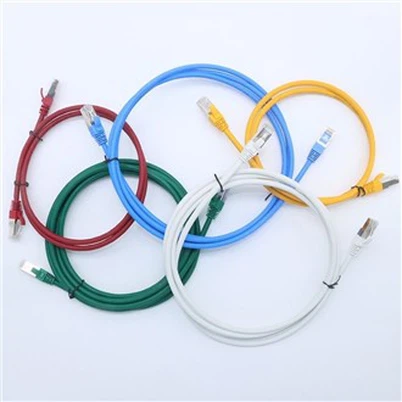
To conclude this guide on Cat6 slim cables - here's a selection of photos showcasing COBTEL's range of sleek designs!