
AI Data Center Server Racks: 800V DC/DC Power Architecture
Jun 24, 2026
Leave a message
TL;DR: AI server racks are racing toward megawatt-level power density, and traditional AC/48V architectures can't keep up. The industry is shifting to 800V high-voltage DC (HVDC) bus systems with three main DC/DC conversion routes: 800V-to-50V (three-stage), 800V-to-12V (two-stage), and 48V single-stage VRM. Each balances efficiency, power density, and scalability differently. This guide breaks down all three architectures, their core topologies, and the emerging role of GaN devices and vertical power delivery.
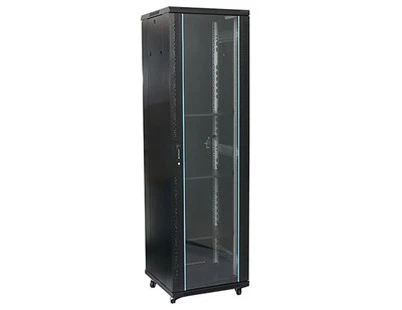
AI data center server racks are purpose-built infrastructure enclosures designed to house and power the high-density GPU, CPU, and AI accelerator hardware that modern artificial intelligence workloads demand. Unlike traditional enterprise server racks - which typically handle 5 to 10 kW per rack - AI data center server racks are engineered to support 40 kW to 250 kW per rack today, with next-generation designs targeting 600 kW to 1 MW as GPU power consumption climbs from 0.4 kW per processor in 2022 toward 2 to 4 kW by 2030. The average AI rack costs 3.9millionin2025,comparedto3.9 million in 2025, compared to 3.9millionin2025,comparedto500,000 for a traditional server rack - a sevenfold increase driven by the structural reinforcement, liquid cooling systems, high-voltage power distribution, and high-bandwidth networking these racks require. This guide covers everything you need to know about AI data center server racks: how they differ from conventional racks, the three stages of power architecture evolution (from 48V DC to 800V HVDC to 1 MW hybrid DC microgrids), the three mainstream 800V DC/DC conversion schemes, the role of GaN devices and vertical power delivery, and how to choose the right architecture for your deployment.
How Is AI Driving the Shift in Data Center Power Architecture?
The power demands of AI workloads have already outgrown the infrastructure that was designed to support them. In 2022, a single AI processor consumed around 0.4 kW, with single racks staying well under 60 kW. By 2024, processor power crossed 2 kW, pushing racks past 150 kW. By 2030, individual AI server racks could draw 600 kW to 1 MW - a density level that traditional AC/48V power chains were never built to handle. By 2030, individual AI server racks could draw 600 kW to 1 MW. This explosive growth is making the traditional AC/48V power supply chain obsolete and forcing a complete rethink of how electricity reaches the processor.

The numbers tell a clear story. In 2022, a single AI processor consumed around 0.4 kW. By 2023, that figure had already broken through the 1 kW barrier, with single racks approaching 100 kW. After 2024, processor power consumption has exceeded 2 kW, and rack-level demand has crossed 150 kW.
NVIDIA's Blackwell-generation GPUs represent this trend in action. The DGX GB200 NVL72 system packs 72 GPUs into a single liquid-cooled rack, drawing over 100 kW of compute power from a single enclosure. And these are still early days for AI infrastructure scaling.
Looking further ahead, the trajectory gets steeper. Between 2027 and 2030, single processors could reach 2 to 4 kW, while individual racks push toward 600 kW and eventually approach 1 MW. At that density, traditional architectures based on single-phase AC input power supply units (PSUs) and 48V DC buses face challenges they were never designed to handle. Higher currents mean greater resistive losses. Thicker copper traces raise costs and weight. And the physical space needed for conventional power conversion hardware competes directly with the compute hardware it's meant to serve.
This is exactly why the industry is moving toward high-voltage DC architectures and rethinking every stage of the DC/DC conversion chain inside the rack.
Three Stages of AI Data Center Power Architecture Evolution
The path from today's power systems to tomorrow's megawatt-capable racks isn't a single jump. It's a three-stage evolution, each stage defined by the rack power density it can support and the conversion topology it uses.
|
Stage
|
Rack Power Range
|
Architecture
|
Timeline
|
|---|---|---|---|
|
Stage 1
|
Under 250 kW
|
Distributed UPS + 48V DC bus
|
Current (now)
|
|
Stage 2
|
~500 kW
|
800V HVDC side cabinet + DC/DC converters
|
Near future (2025–2027)
|
|
Stage 3
|
~1 MW
|
Hybrid DC microgrid + solid-state transformers
|
2030 vision
|
Stage 1: Current Architecture (Under 250 kW per Rack)
Today's data centers use distributed UPS systems with a 48V DC bus. The power delivery path looks like this:
- Medium-voltage AC (10–34.5 kV) enters the facility
- Line-frequency transformers step it down to 380V three-phase low-voltage AC
- Power distribution units and circuit breakers route power to each rack
- PSUs inside the rack convert AC to 48V DC
- An intermediate bus converter (IBC) steps 48V down to 12V at the motherboard
- Voltage regulator modules (VRMs) deliver the final 0.8V to processor cores
- Distributed battery backup units (BBUs) on the 48V bus provide uninterruptible power
Distributed battery backup units (BBUs) hang on the 48V bus to provide uninterruptible power. This architecture works well for current rack densities, but it was designed for a world where data center power consumption was measured in tens of kilowatts per rack, not hundreds.

Stage 2: Near Future (Around 500 kW per Rack)
As rack power density climbs, PSUs are moving out of the IT rack entirely. The emerging approach uses three-phase high-voltage DC side cabinets.
In this model, a power-side cabinet houses three-phase PSUs and BBUs. It delivers plus or minus 400V or 800V DC to the IT racks over a high-voltage bus. DC/DC converters inside the IT rack then step that voltage down to the levels each component needs. This architecture significantly improves both conversion efficiency and power density by reducing the number of conversion stages between the grid and the processor.

Stage 3: The 2030 Vision (1 MW per Rack)
At megawatt-level rack power, the architecture will evolve into a hybrid DC microgrid. Solid-state transformers (SSTs) will replace traditional line-frequency transformers and side cabinets, delivering single-stage power conversion with much higher power density.
Combined with solid-state circuit breakers (SSCBs), this creates a DC microgrid built on a high-voltage DC bus. It enables multi-port DC coupling of power sources, the grid, loads, and energy storage. IT racks will run directly on 800V or higher, with step-down conversion to 48V, then 12V, and finally 0.8V for processor cores.

The Bottom Line
From AC to HVDC to hybrid DC microgrids, these three stages map out a clear evolution path. As AI large language models and intelligent computing centers scale up, 800V HVDC is shifting from an optional upgrade to a required foundation for next-generation AI infrastructure.
What Are the Three Mainstream 800V DC/DC Power Supply Schemes?
Inside an 800V HVDC rack, three main DC/DC conversion schemes handle the multi-stage path from 800V input down to the 0.8V core voltage that AI processors need. They differ in the number of conversion stages, VRM input voltage, and the tradeoffs they make between efficiency, density, and ecosystem compatibility.
The three 800V DC/DC conversion schemes differ in the number of voltage conversion stages, the VRM input voltage they produce, and the tradeoffs they make between efficiency, power density, and ecosystem compatibility. Choosing the wrong scheme for your rack density and infrastructure baseline can create PDN bottlenecks, limit future scalability, or force a costly redesign. Here is how each scheme works and where each fits.
Scheme 1: 800V to 50V (Three-Stage Conversion)
This approach uses a high-voltage IBC with an LLC resonant converter at a 16:1 ratio to step 800V down to approximately 50V. A second-stage low-voltage IBC (hybrid switched-capacitor converter at 8:1) further reduces the voltage to around 6V. Finally, a VRM module delivers the output to the GPU core.
Advantages: It reuses the mature 48V ecosystem. The 6V low-voltage VRM design offers better scalability and helps boost VRM power density.
Disadvantages: The three-stage conversion chain is longer. Each additional stage adds losses, which reduces overall efficiency.

Scheme 2: 800V to 12V (Two-Stage Conversion)
This scheme uses a high-voltage IBC (LLC at 64:1) to convert 800V directly to 12V. From there, a VRM module outputs directly to the GPU core.
Advantages: Only two stages. The shorter path means a simpler architecture and fewer components.
Disadvantages: The VRM operates at a 12V input, which limits its power density and current-handling capability. This can create a power delivery network (PDN) bottleneck between the IBC and the VRM.

Scheme 3: 48V Single-Stage VRM (Quasi Two-Stage)
This scheme pairs a high-voltage IBC (LLC 16:1) with a 48V single-stage VRM. The VRM delivers output directly to the GPU core.
Advantages: Forms a quasi-two-stage architecture that shortens the power transmission path.
Disadvantages: The single-stage VRM, positioned close to the GPU, has relatively lower power density.

Quick Comparison Table
Looking at the VRM input side, both the 800V-to-50V scheme and the 800V-to-12V scheme feed either 12V or 6V to the VRM. The 48V single-stage VRM scheme, by contrast, uses approximately 48V as its VRM input. Based on this difference, we can group the three architectures into two categories: those based on 12V/6V VRM, and those based on 48V VRM.
How Do 12V/6V VRM Architectures Work in AI Server Racks?
In the 12V/6V VRM architecture, a multi-phase Buck converter handles the final voltage conversion from 12V or 6V down to the roughly 0.8V to 1V that GPU cores need. This topology is well suited for the extreme current demands of AI processors, but it places high requirements on packaging, magnetic integration, and thermal management.
The Multi-Phase Buck Converter
In both the 800V-to-50V and 800V-to-12V schemes, the bus voltage reaching the VRM is approximately 12V or 6V, with an output target of around 1V. Multi-phase Buck converters fit this conversion need extremely well. They split the output current across multiple parallel phases, which reduces stress on individual components and improves transient response.
However, the massive output currents required by modern AI chips (hundreds to over a thousand amps) push every aspect of VRM design to its limits. Packaging must minimize parasitic inductance. Magnetic components must handle high currents in tight spaces. And thermal solutions must remove significant heat from a very small area.
Horizontal Power Delivery and Its Limits
Traditional 12V VRM designs route current "horizontally" across the motherboard. The power delivery network (PDN) traces run laterally from the VRM to the processor socket. This worked fine when processor currents were moderate.
But as AI chip currents surge into the hundreds or even thousands of amps, the parasitic resistance and parasitic inductance in horizontal PDN traces become serious performance bottlenecks:
Transient response suffers: The long current path and high parasitic parameters make it difficult to support high-speed load changes.
Efficiency plateaus: PDN losses account for a growing share of total power consumption, making further efficiency gains harder to achieve.

Why Is Vertical Power Delivery Replacing Horizontal Power Delivery?
Vertical power delivery sends current from the VRM directly "upward" into the processor die instead of routing it horizontally across the motherboard. This dramatically shortens the PDN, moves the VRM closer to the load, reduces parasitic losses, and improves both conversion efficiency and power density.
The concept is straightforward. Instead of the current traveling horizontally along PCB traces to reach the chip, it flows vertically through the substrate or package. This cuts the electrical path length by an order of magnitude in some designs.
The benefits cascade from there. Shorter paths mean lower parasitic resistance and inductance. Lower parasitics mean faster transient response. And faster transient response means the VRM can keep up with the rapid load swings that modern AI data center GPU workloads demand.

3D Packaging and Thermal Integration
Beyond the direction of power flow, the packaging and structural design of power modules directly affect VRM efficiency, thermal performance, and scalability. VRM technology is moving from traditional planar packaging toward more compact, higher-density three-dimensional structures.
These advanced packaging approaches integrate inductors and thermal management into the chip package itself. By bringing the power conversion stage physically closer to (or even underneath) the processor die, they further reduce PDN length while enabling more effective heat extraction from the VRM components. This evolution from flat to 3D is essential for supporting the next generation of high-density rack deployments where board space is at an absolute premium.

The 48V Intermediate Bus Converter: HSC Topology and GaN Advantages
In the 48V power supply architecture for data centers, the intermediate bus converter (IBC) serves as the critical link between the high-voltage bus and the low-voltage load. It handles the voltage conversion from approximately 48V down to 12V or 6V.

How the Hybrid Switched-Capacitor (HSC) Converter Works
The hybrid switched-capacitor (HSC) converter combines the advantages of switched-capacitor converters and LLC resonant converters. It achieves both zero-voltage switching (ZVS) turn-on and near zero-current switching (ZCS) turn-off for its switching devices.
Compared to a standard LLC converter, the HSC topology reduces losses in the synchronous rectifier and transformer windings while also improving the voltage conversion ratio. The relationship between input and output voltage is set by the switched-capacitor network, which provides a fixed-ratio, high-efficiency conversion stage.

Infineon has developed a 1.3 kW HSC converter module with dimensions of just 42 x 18 x 7.7 mm and a transformer turns ratio of 8:1. This compact module demonstrates the density advantages the HSC topology brings to data center power conversion.


Where Do the Losses Come From?
Because of the HSC's soft-switching performance, the major losses don't come from the switching devices themselves. Instead, they concentrate in the magnetic components and the PCB. Loss analysis of experimental prototypes shows that magnetic component losses account for more than 50% of total losses in a typical HSC converter.

This distribution has important implications for design optimization. Rather than focusing primarily on switch selection, engineers need to prioritize advanced magnetics design and PCB layout to push efficiency higher.

Output Impedance and Dead-Time Effects
During dead time (the brief interval between switching transitions), the junction capacitance charge of the switching devices directly affects the converter's output impedance, which in turn impacts operating efficiency.

The output impedance (Rout) is proportional to the dead time (tdt). Longer dead times mean higher impedance and lower efficiency. This relationship makes switching speed a critical factor in HSC performance, and it's precisely where the next major innovation enters the picture.

Why GaN Devices Make a Real Difference
Introducing gallium nitride (GaN) devices into the HSC topology is a key step toward improving both efficiency and power density. GaN transistors offer lower gate charge and faster switching speeds than their silicon counterparts, which significantly reduces output impedance (Rout).
The practical impact is striking. In an HSC prototype where GaN devices replaced silicon FETs, the number of top-side FETs dropped from 8 to just 4, cutting the component count in half. This reduction directly translates to smaller module size, lower cost, and simpler assembly.

Efficiency testing shows that the GaN-based prototype achieves slightly higher peak efficiency than the silicon version. At 1 kW full load, the efficiency difference between GaN and Si is about 0.15%, with both achieving strong conversion efficiency. The real advantage of GaN shows up in the reduced component count, improved power density, and the lower output impedance that benefits dynamic performance under rapidly changing AI workloads.

High-Voltage Intermediate Bus Converters: 800V to 50V and 800V to 12V
In the 800V HVDC bus architecture, the high-voltage intermediate bus converter (HVIBC) is the critical first stage. It steps down the cabinet-level 800V bus to a medium-voltage rail that feeds the downstream VRM stage. Two HVIBC designs dominate the current landscape.
800V to 50V LLC DCX
The 800V-to-50V LLC DCX uses a resonant LLC topology with a 16:1 turns ratio to convert the 800V bus down to approximately 50V. This aligns with the traditional 48V ecosystem, making it compatible with existing downstream IBC and VRM designs.
Infineon's 800V-to-50V LLC DCX prototype achieves a power density of 1.6 W/mm². This high density is critical in AI server racks where every millimeter of board space competes with compute, memory, and networking hardware.


800V to 12V LLC DCX
The 800V-to-12V LLC DCX takes a more aggressive approach with a 64:1 turns ratio. It converts the 800V bus directly to 12V, eliminating the intermediate 48V stage entirely.
Infineon's 800V-to-12V LLC DCX prototype achieves a power density of 1.2 W/mm². While the density is somewhat lower than the 50V version, this approach reduces the total number of conversion stages between the bus and the GPU, which can offset the density difference with improved end-to-end efficiency.


Comparing the Two Approaches
The choice between these two HVIBCs depends on the downstream architecture. If you're building around an existing 48V ecosystem with proven IBCs and VRMs, the 800V-to-50V path offers compatibility and higher first-stage density. If you want to minimize total conversion stages and simplify the power chain, the 800V-to-12V route provides a shorter path at the cost of slightly lower first-stage density and potential PDN challenges.
What Makes the 48V Single-Stage VRM Architecture Different?
The 48V single-stage VRM architecture uses a current-doubler rectifier topology that integrates output inductance directly into the transformer. This eliminates separate inductor components, dramatically reduces magnetic element volume, and shortens the power path from bus to processor core.
After covering the 12V/6V VRM architectures, let's look at the other major technical route: the 48V VRM architecture. Compared to traditional 12V/6V approaches, this architecture targets higher bus voltage, fewer conversion stages, higher conversion efficiency, and greater power density. It's quickly becoming an important direction for next-generation AI server power systems.
Current-Doubler Rectifier Topology
The current-doubler rectifier topology is the foundation of 48V VRM designs for data center applications. It provides a combination of high step-down ratio, high current capacity, and structural simplicity that suits the demands of AI workloads.
A key advantage is that the output inductors can be integrated into the transformer itself. The transformer's magnetizing inductance serves as the output inductance, which greatly reduces the volume of magnetic components and boosts power density. Fewer magnetic components also means fewer sources of loss and a more compact layout on the board.

Integration with Zero-Bias TLVR
Taking this further, Infineon has proposed combining the current-doubler rectifier topology with a zero-bias trans-inductor voltage regulator (TLVR). This combination adds voltage regulation capability to the fixed-ratio current-doubler stage.

Experimental results show this approach delivers strong transient performance. At 48V input, the prototype achieves a peak efficiency of 90.3% and a current density of 0.5 A/mm². While these numbers may seem modest compared to lower-voltage VRM designs, they represent significant progress for a single-stage converter handling such a large step-down ratio (48V to under 1V).

Why This Route Is Gaining Traction
The 48V single-stage VRM approach attracts interest because it addresses a fundamental scaling problem. As rack power climbs toward megawatt levels, every conversion stage adds loss and takes up space. By delivering power at 48V directly to a single-stage VRM near the GPU, this architecture removes an entire conversion layer from the chain.
The tradeoff is clear: the VRM itself must handle a much larger voltage step-down in a single stage, which currently limits its power density compared to multi-stage approaches. But the total system efficiency can be competitive because there are fewer stages losing energy along the way.
How to Choose the Right DC/DC Architecture for Your AI Data Center
Choose based on three factors: your current rack power density, your scalability timeline, and whether your existing ecosystem is built around 48V or 12V infrastructure. There is no single "best" architecture; each of the three 800V DC/DC schemes fits a specific deployment scenario.
Match Architecture to Power Density
For racks under 250 kW, the existing distributed UPS with 48V bus architecture still works. If you're operating in this range and not planning a major expansion soon, upgrading your data center rack solutions and cabling may deliver more immediate value than a full power architecture overhaul.
For racks in the 250 to 500 kW range, the HVDC side-cabinet approach with one of the three 800V DC/DC schemes becomes necessary. Your choice among the three should consider what VRM and IBC infrastructure you already have.
For facilities targeting 500 kW and beyond (with an eye toward 1 MW), plan for the hybrid DC microgrid architecture with SSTs. This is a longer-term investment, but building with future expansion in mind avoids costly retrofits.
Consider Your Ecosystem
If you have a mature 48V ecosystem with proven IBCs and VRMs, the 800V-to-50V three-stage path offers the smoothest transition. You'll reuse existing downstream components while upgrading only the high-voltage front end.
If you're building fresh and want the simplest possible power chain, the 800V-to-12V two-stage approach minimizes components. Just be sure your PDN design can handle the current densities involved.
If power density and conversion efficiency are your top priorities and you can invest in newer 48V VRM technology, the single-stage VRM route offers the shortest electrical path and the fewest loss stages.
Don't Forget the Cabling
Power architecture decisions don't exist in isolation. The cabling and optical connectivity inside your rack must keep pace with power density. Higher-density racks need DAC and AOC cables optimized for AI workloads alongside high-speed 800G optical transceivers for rack-to-rack and rack-to-switch links. The physical infrastructure must match the electrical infrastructure for the whole system to perform.
At COBTEL, we've developed end-to-end 400G/800G/1.6T transmission solutions specifically for AI data centers. This gives us first-hand insight into how power architecture choices affect everything from rack layout to optical connectivity and cabling management standards.
|
Your Situation
|
Recommended Architecture
|
|---|---|
|
Existing 48V infrastructure, racks under 250 kW
|
Keep current 48V distributed UPS architecture
|
|
Upgrading to 250–500 kW, existing 48V downstream components
|
800V-to-50V (three-stage): reuses your existing IBCs/VRMs
|
|
New build, 250–500 kW, want simplest power chain
|
800V-to-12V (two-stage): fewer stages, lower component count
|
|
New build, max efficiency priority, investing in 48V VRM tech
|
48V single-stage VRM: shortest electrical path, fewest losses
|
|
Planning for 500 kW–1 MW by 2028–2030
|
Design for hybrid DC microgrid with SST from the start
|
Conclusion
The shift to 800V HVDC power supply architectures for AI data center server racks isn't a future possibility - it's the infrastructure standard being deployed right now in hyperscale and enterprise AI facilities. As GPU power climbs from 2 kW toward 4 kW per processor and single-rack demands push from 150 kW toward 1 MW, the traditional AC/48V supply chain cannot scale. The three DC/DC conversion schemes - 800V-to-50V, 800V-to-12V, and 48V single-stage VRM - each serve a specific role in this evolution, with GaN devices, vertical power delivery, and advanced packaging accelerating progress across all three routes. The decision for data center planners is not whether to adopt 800V HVDC, but which conversion path fits your current rack density, your existing ecosystem, and your scalability timeline. Use the decision table above to map your situation to the right architecture, and plan your physical rack, cabling, and optical infrastructure to match.
Frequently Asked Questions
Q1: Why is 800V HVDC becoming the standard for AI data center server racks?
Traditional AC/48V power architectures were designed for racks drawing tens of kilowatts. AI racks now exceed 150 kW and are heading toward 600 kW to 1 MW. At these power levels, lower-voltage DC buses require extremely thick copper conductors and suffer unacceptable resistive losses. The 800V HVDC bus reduces current by a factor of roughly 16 compared to 48V for the same power, which slashes conductor weight, resistive losses, and physical space requirements.
Q2: What is the difference between a two-stage and three-stage DC/DC conversion architecture?
A three-stage architecture (like the 800V-to-50V scheme) converts voltage in three steps: 800V to 50V, then 50V to 6V, then 6V to the processor's 0.8V core voltage. A two-stage architecture (like the 800V-to-12V scheme) skips the middle step by converting 800V directly to 12V, then 12V to 0.8V. Fewer stages generally mean fewer losses and simpler designs, but they place greater demands on each individual conversion stage.
Q3: How do GaN devices improve DC/DC converter efficiency in data centers?
GaN (gallium nitride) transistors switch faster and have lower gate charge than silicon devices. In a hybrid switched-capacitor converter, replacing silicon FETs with GaN transistors cut the top-side FET count from 8 to 4 while maintaining nearly identical full-load efficiency. The faster switching also reduces dead-time losses and output impedance, which improves dynamic performance under the rapid load swings typical of AI workloads.
Q4: What role does vertical power delivery play in AI server power systems?
Vertical power delivery sends current from the VRM directly "upward" into the processor die instead of routing it horizontally across the motherboard. This shortens the power delivery network dramatically, reducing parasitic resistance and inductance. The result is faster transient response, lower PDN losses, and higher power density. It's especially important for AI chips drawing hundreds to over a thousand amps.
Q5: Can existing 48V data center infrastructure be upgraded to 800V HVDC?
Yes, with the right transition path. The 800V-to-50V DC/DC scheme was specifically designed to reuse existing 48V downstream components (IBCs and VRMs) while adding a high-voltage front-end stage. This allows data centers to upgrade incrementally: add HVDC side cabinets and high-voltage IBCs while keeping your existing 48V-to-12V IBCs and 12V/6V VRMs in place. A full ground-up redesign is only needed for new builds targeting maximum efficiency.
Q6: What are the key physical differences between AI data center server racks and traditional server racks?
AI data center server racks differ from traditional server racks in four critical dimensions. Power density: Traditional racks handle 5–10 kW; AI racks require 40–250 kW, with next-generation designs targeting 600 kW–1 MW. Cooling: Traditional racks use air cooling; AI racks require liquid cooling (direct liquid cooling, rear-door heat exchangers, or immersion) to remove the heat load from GPUs drawing 300–1,000 W each. Structural load: AI racks can weigh over 1.5 tonnes when fully populated with GPU servers and liquid cooling hardware, requiring reinforced flooring and rack frames rated for 5,000+ lbs static load. Cost: A fully configured AI rack averages 3.9millionin2025vs.3.9 million in 2025 vs. 3.9millionin2025vs.500,000 for a traditional server rack. These differences mean AI data center server racks are not simply "heavier, more powerful" versions of standard racks - they are a fundamentally different infrastructure category requiring purpose-built facilities.