
What Is Fire Rated Cable:Types, Ratings & How to Choose
Leave a message
Fire Rated Cables have always been a highly popular product category in the cable industry. So what is a fire rated cable? Fire Rated Cables are cables that can maintain normal operation for a certain period under high temperature or fire conditions, primarily used to ensure the safety of power transmission and signal control. Fire Rated Cables' core characteristic lies in the use of special flame-retardant materials and structural design, which can delay flame spread, reduce toxic smoke production, and maintain circuit integrity during a fire.
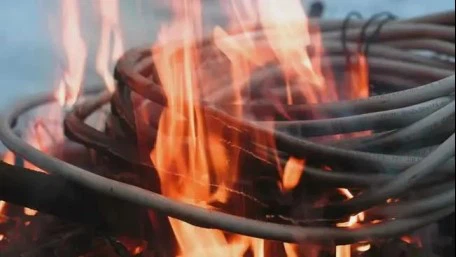
That is, under specified test conditions, when a sample is burned and after the test flame source is removed, the flame spread is limited to a specified range, and any residual flame or glow extinguishes itself within a specified time. Such a cable may be damaged and unable to operate in a fire, but it can prevent the spread of the fire. In layman's terms, if a cable catches fire, it can confine the burning to a local area, preventing spread and protecting other equipment, thereby avoiding greater losses.
Currently, the cable industry habitually refers to cables with certain fire-proof properties, such as Flame Retardant, Low Smoke Zero Halogen (LSZH), Low Smoke Fume (LSF), and Fire Resistant, collectively as Fire Rated cables.
1. Classification of Fire Rated Cables
1.1 Flame Retardant Cable
1.2 Low Smoke Zero Halogen (LSZH) Cable
LSZH cables have significant advantages in fire resistance and flame retardancy. They effectively inhibit flame propagation during a fire, making them particularly suitable for places with high safety and environmental requirements. When burning, the very low smoke production greatly improves visibility during a fire, aiding personnel evacuation and escape, and facilitating timely rescue operations. Furthermore, they do not release toxic halogen gases, reducing harm to humans, instruments, and equipment, as well as environmental pollution. Although LSZH cables offer excellent flame retardancy, corrosion resistance, and low smoke density, their mechanical and electrical properties are slightly inferior to those of ordinary cables.
1.3 Low Smoke Fume (LSF) Cable
1.4 Fire Resistant Cable
2. Fire Rated Cables Related Standards and Regulations
It requires that communication cables be tested and meet fire, mechanical, and electronic standards, and undergo independent testing by laboratories (e.g., Underwriters Laboratories). Article 770, concerning the installation of optical fiber cables with conductive elements, classifies them as: OFN – conductive optical fiber cable, OFNP – non-conductive plenum, OFNR – non-conductive riser. OFNP represents the highest flame retardant rating. The NEC fire standards are published by the National Fire Protection Association (NFPA) and are revised every three years, with the most recent revision being in 1996. NEC Article 800 establishes four levels of fire resistance requirements that all communication wires and cables installed within buildings must meet. They must also be clearly marked. These cable markings help identify the safety level and are valuable from a building inspection and hazard assessment perspective.
Underwriters Laboratories (UL) developed test methods to verify cable compliance with NEC standards.
UL and ETL are both certification bodies for fire-resistant cables. For NRTL (Nationally Recognized Testing Laboratories), both product testing and certification require qualification. Certification includes periodic factory inspections to ensure the manufacturer's continuous production conforms to the factory inspection manual.
Currently, there are nine recognized NRTLs in North America, including ETL, UL, and CSA. They can test, verify, and certify the fire resistance rating and TIA/EIA category performance of communication cables.
These labs test cables according to standards and ensure cables are adequately marked with the appropriate fire rating. Labs also conduct factory inspections to ensure manufacturing process consistency. How to identify cable fire performance: Fire performance is indicated by markings on the cable jacket. The IBDN cable coding system is used as an example below.
Nordx/CDT provides three series of enhanced horizontal cables: the IBDN-1200, IBDN-2400, and IBDN-4800LX series. The IBDN-1200 series consists of specific cables like 1212, 1213, and 1224. The IBDN-2400 and IBDN-4800LX series are similar. The first two digits (e.g., "12", "24") relate to the maximum recommended data transmission rate. When used in IBDN gigabit cabling solutions, the cable can operate at 1.2 and 2.4 Gbps. The third digit relates to cable design, indicated as follows:
The last digit represents the flame propagation rating, as follows:
Nordx/CDT also provides three series of fiber optic cables: the IBDN-FX300, IBDN-FX600, and IBDN-FX2000 series. Fire performance markings include:
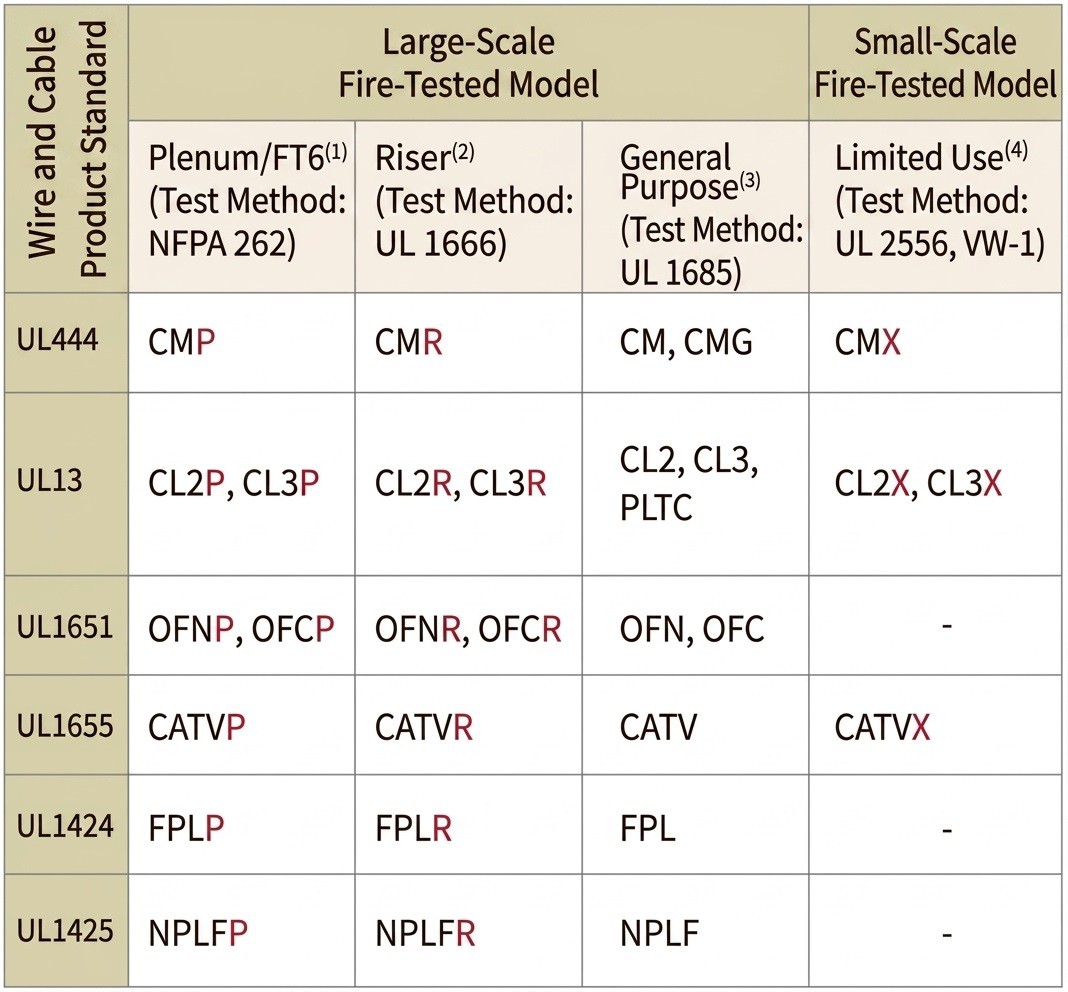
Plenum-rated cables, listed and certified as CMP or OFNP, have high flame retardancy and low smoke production, suitable for air-circulating spaces like raised ceilings and floors. Riser-rated cables, listed and certified as CMR or OFNR, are installed vertically, passing through one or more floors, or within ventilating shafts. These cables are flame retardant and can prevent the spread of flames.
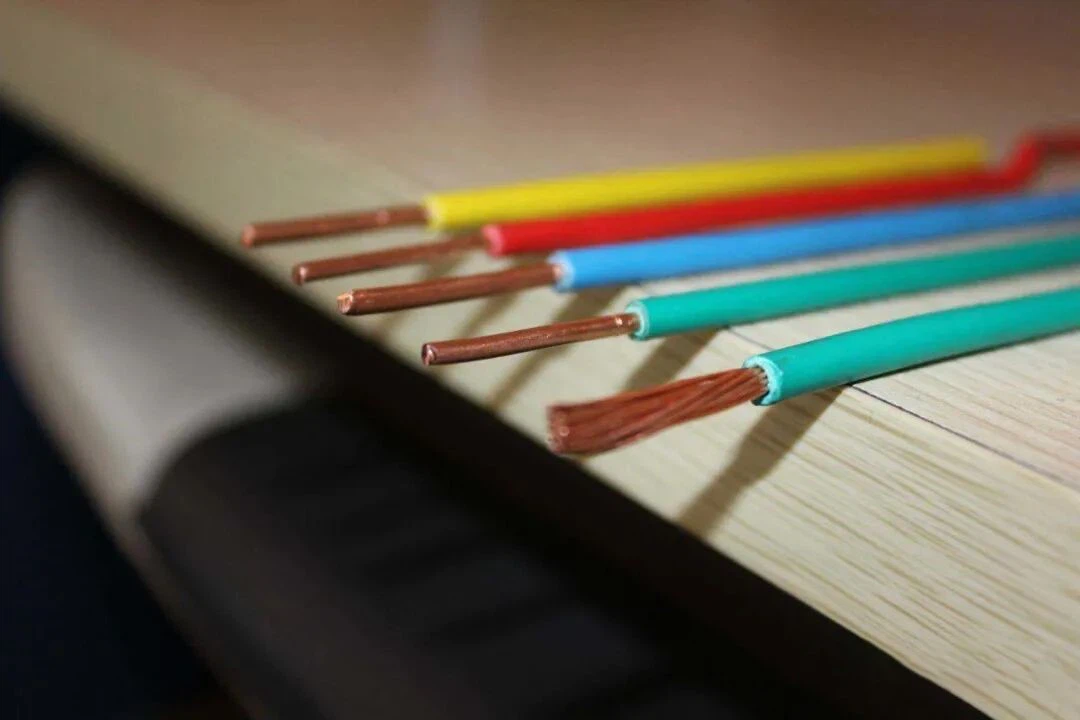
◎ Flame Retardant Cable
◎ Low Smoke Halogen Free (LSOH) Cable
◎ Low Smoke Fume (LSF) Cable
◎ Fire Resistant Cable
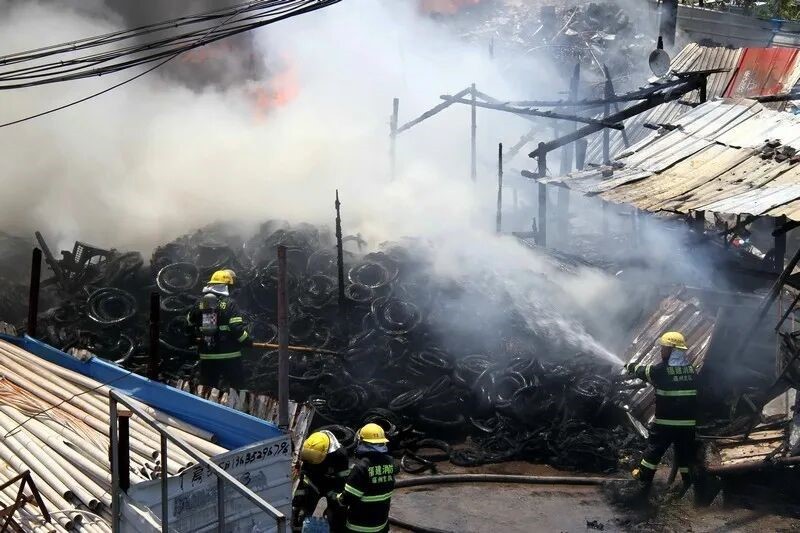
3. Fire Rated Cable Flame Retardant Standards and Ratings
The fire ratings for Ethernet cables are primarily classified based on the cable's performance under fire conditions. The following are common fire ratings with brief descriptions.
3.1 Underwriters Laboratories Standard: UL 910
Plenum Grade - CMP (Plenum Flame Test / Steiner Tunnel Test)
This is the highest requirement cable (Plenum Cable) in the UL fire standards, subject to safety standard UL 910. The test specifies installing multiple cable samples in a horizontal wind tunnel, burning them with an 87.9 KW (300,000 BTU/Hr) methane gas burner for 20 minutes. The acceptance criteria are that the flame must not extend more than 5 feet from the leading edge of the burner flame. The peak optical density must be a maximum of 0.5, and the average density value must be a maximum of 0.15. These CMP cables are typically installed in ventilation ducts or air return plenums used by air handling equipment, and are recognized and adopted in Canada and the United States. Materials like FEP/Plenum, which meet the UL 910 standard, offer superior flame retardancy compared to Low Smoke Halogen Free materials that meet the IEC 60332-1 and IEC 60332-3 standards.
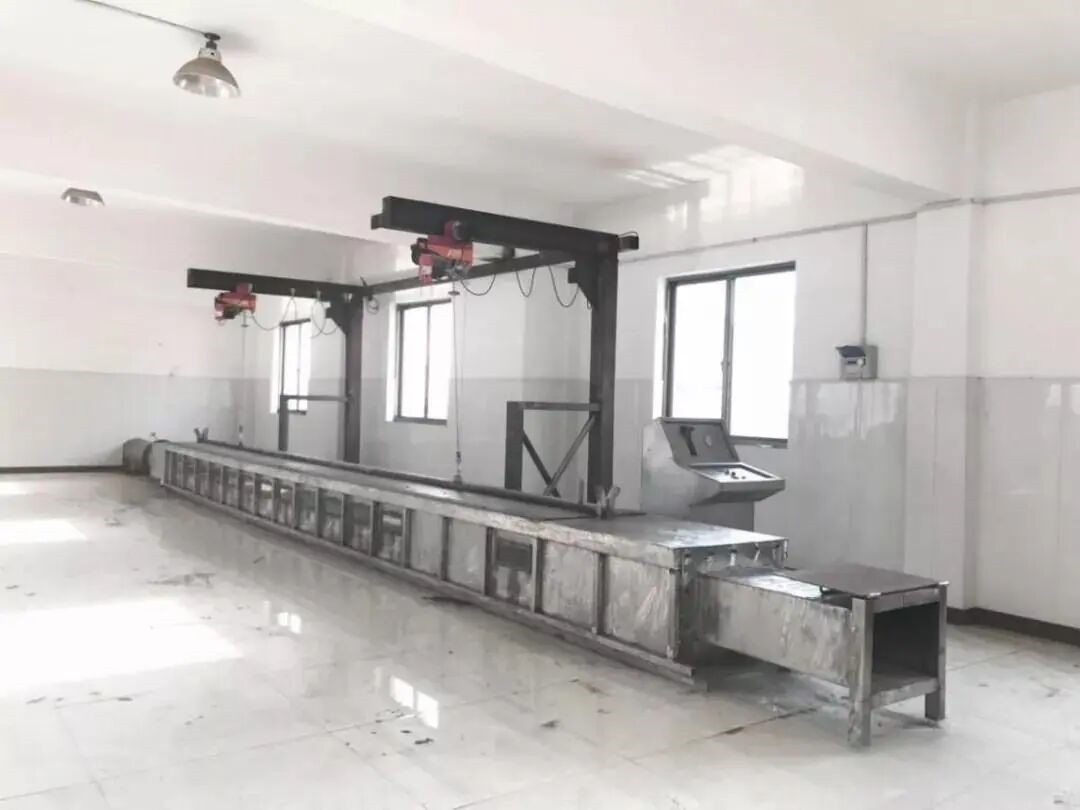
Figure | CMP Test Chamber
Definition: Plenum-rated cable, suitable for air-circulating spaces such as between building ceilings and floors.
Characteristics: Made from non-combustible materials, offering extremely high flame retardancy, producing minimal smoke and non-toxic gases when burned.
Applications: Typically used in buildings with high safety standards, such as offices, hospitals, schools, etc.
Standards: Complies with NFPA 262 or UL 910 standards.
The Plenum fire rating refers to the fire protection level standard for interior building spaces, specifically air circulation areas like ventilation ducts and cable pathways. It is used to guide the selection of building materials to ensure that, in a fire, flames and smoke do not propagate within these air circulation areas, thus ensuring personnel safety and reducing property damage.
Riser Grade - CMR (Riser Flame Test)
This is the commercial grade cable (Riser Cable) in the UL standard, subject to safety standard UL 1666. The test specifies installing multiple cable samples in a simulated vertical shaft, using a specified 154.5 KW (527,500 BTU/Hr) gas Bunsen burner, with a test duration of 30 minutes. The acceptance criterion is that the flame must not spread to the upper part of a 12-foot-high room. Riser-rated cables have no smoke density specification and are generally used for vertical and horizontal wiring within floors.
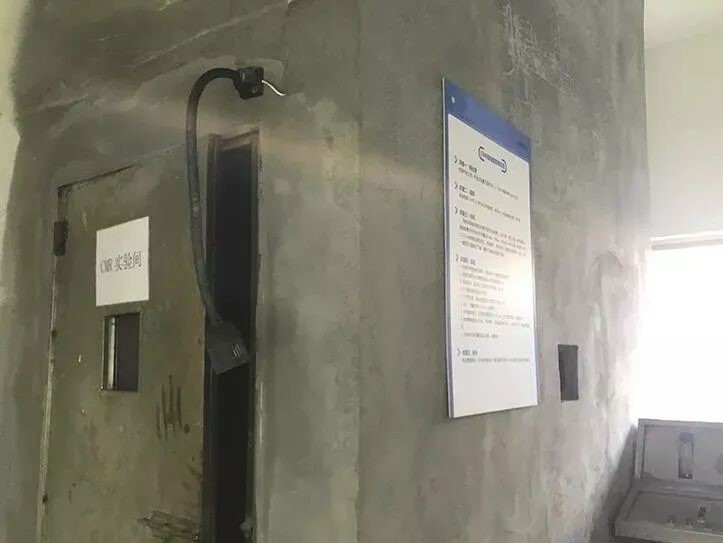
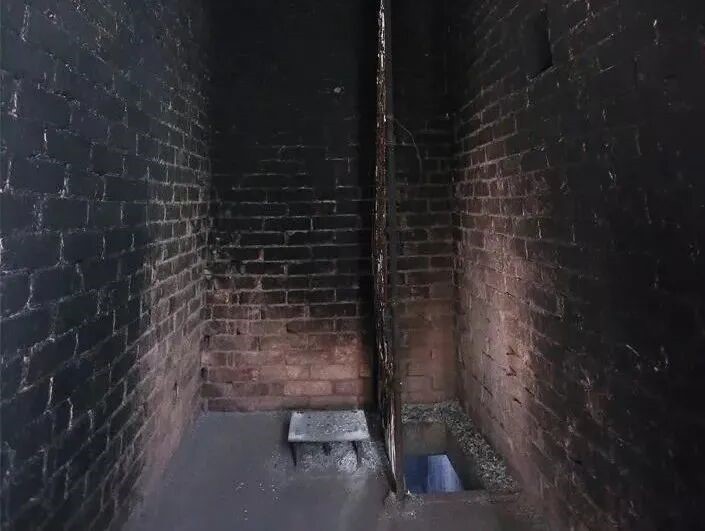
Figure | CMR Test Chamber
Definition: Riser-rated cable, suitable for vertical pathways such as building shafts and elevator hoistways.
Characteristics: Performs well in vertical burn tests, preventing flame spread to multiple floors.
Applications: Suitable for installations requiring extension from one floor to another.
Standards: Complies with UL 1666 standards.
Compared to Low Smoke Zero Halogen (LSZH) cables, CMR cables produce a certain amount of smoke and toxic gases when burned, but their primary function is to prevent flame spread. CMR cables should be installed within vertical pathways in buildings, ensuring the routing path complies with relevant codes and standards. During installation, attention should be paid to installing fire barriers or firestop devices to further prevent flame propagation through the cable pathway.
Commercial Grade - CM (Vertical Tray Flame Test)
This is the commercial grade cable (General Purpose Cable) in the UL standard, subject to safety standard UL 1581. The test specifies installing multiple cable samples on a vertical 8-foot high rack, burning them with a specified 20 KW (70,000 BTU/Hr) ribbon burner for 20 minutes. The acceptance criteria are that the flame must not spread to the upper end of the cable and must self-extinguish. UL 1581 is similar to IEC 60332-3C, differing mainly in the number of cables tested. Commercial grade cables have no smoke density specification and are generally only used for horizontal runs on the same floor, not for vertical runs between floors.
Definition: General communication cable, suitable for horizontal wiring within buildings.
Characteristics: Does not rapidly propagate flames when burned, meeting general flame retardant requirements*
Applications: Suitable for horizontal cable runs inside general buildings.
Standards: Complies with UL 1685 or IEC 60332-3 standards.
Overall, CM rated cables offer adequate fire resistance for general-purpose horizontal wiring inside buildings, providing basic fire protection, but are not suitable for locations requiring higher fire ratings. Selection and installation should be based on the specific application environment and safety requirements*
General Purpose Grade - CMG (Vertical Tray Flame Test)
This is the general purpose cable (General Purpose Cable) in the UL standard, subject to safety standard UL 1581. The test conditions for commercial grade (CM) and general purpose grade (CMG) are similar, and both are recognized for use in Canada and the United States. General purpose grade cables have no smoke density specification and are generally only used for horizontal runs on the same floor, not for vertical runs between floors.
Definition: General communication cable, similar to CM cable but with specific differences in use and standards*
Characteristics: Possesses certain flame retardant properties, but lower than CMP and CMR.
Applications: Used for general communication cabling.
Standards: Complies with UL 1581 standards.
The flame retardant level of CMG cables falls between CM and CMR cables. CMG cables have better flame retardancy than CM cables but are lower than CMR cables. They can limit flame spread in a fire, but their flame retardant effect is not as good as higher-grade cables (like CMP and CMR). Overall, CMG rated cables are suitable for general-purpose communication wiring inside buildings, providing a moderate level of fire protection.
Residential Grade - CMX (Vertical Wire Flame Test)
This is the residential/restricted grade cable (Restricted Cable) in the UL standard, subject to safety standard UL 1581, VW-1. The test specifies that the sample is held vertically and burned with a test burner (30,000 BTU/Hr) for 15 seconds, then stopped for 15 seconds, repeated 5 times. The acceptance criteria are that the after-flame must not exceed 60 seconds, the sample must not be burned more than 25%, and surgical cotton placed at the bottom must not be ignited by falling particles. UL 1581 VW-1 is similar to IEC 60332-1, differing mainly in the burn times. This grade also has no smoke or toxicity specifications and is only used for single cable runs in homes or small office systems. These cables should not be used in bundles without conduit. There are no specifications for smoke density, halogen content, or toxicity.
Definition: Restricted communication cable, suitable for home and small office wiring.
Characteristics: Lower flame retardant performance, only suitable for exposed single or dual cable installations*
Applications: Suitable for short-distance wiring in homes and small offices.
Standards: Complies with UL 1581 VW-1 standards.
CMX cables have the lowest flame retardant performance, designed for single or small quantity wiring applications. Their flame retardant requirements are much lower than CM, CMG, and CMR cables. CMX cables offer the lowest flame retardant performance under fire conditions, only preventing flame propagation for single or a few cables. Therefore, relevant fire codes must be followed during installation, avoiding routing cables through firewalls or fire barriers.
3.2 IEC 60332 Standards
This is the flame retardant standard for a single cable. The test specifies that a 60 cm long sample is vertically fixed inside a metal box with an open front. A propane burner with a 175 mm flame length is applied to the cable at a 45-degree angle, 450 mm below the upper fixing point. The test passes if the damaged portion of the sample from the lower fixing point does not exceed 50 mm.
This is the flame retardant standard for bunched cables. The test specifies that bundles of 3.5 m long cable samples are fixed to a ladder-like test rack using wire. The number of samples is determined by the required amount of non-metallic material for different classifications. The sample bundle is hung vertically against the back wall of the combustion chamber. Air is drawn into the chamber through inlets in the floor. A propane ribbon burner with a 750°C flame contacts the sample. Under forced ventilation (airflow 5 m³/min, wind speed 0.9 m/s), the cables must not ignite within a 20-minute vertical burn, and the cable must self-extinguish within a flame spread of 2.5 meters. IEC 60332 has categories A, B, C, and D to evaluate flame retardancy performance.
This is a specification for Hydrogen Chloride (HCL) emission concentration in IEC and BS standards. Halogens include Fluorine, Chlorine, Bromine, Iodine, and the radioactive volatile element Astatine, which are highly toxic. The test specifies that a quartz boat containing a 1.0g sample is pushed into a furnace preheated to 800°C. The HCL released is absorbed into water using an airflow, and the halogen acid content of the aqueous solution is then determined. If the Hydrogen Chloride (HCL) release from the cable material during combustion is less than 5 mg/g, it can be called a halogen-free cable (LSOH). If the Hydrogen Chloride (HCL) release is greater than 5 mg/g but less than 15 mg/g, it can be called a low halogen cable (LSF). It is important to note the specifics of the IEC 60754-1 method.
4. Flame Retardant Cables, Fire Resistant Cables, and the Differences Between Them
4.1 Flame Retardant Cable

4.2 Fire Resistant Cable

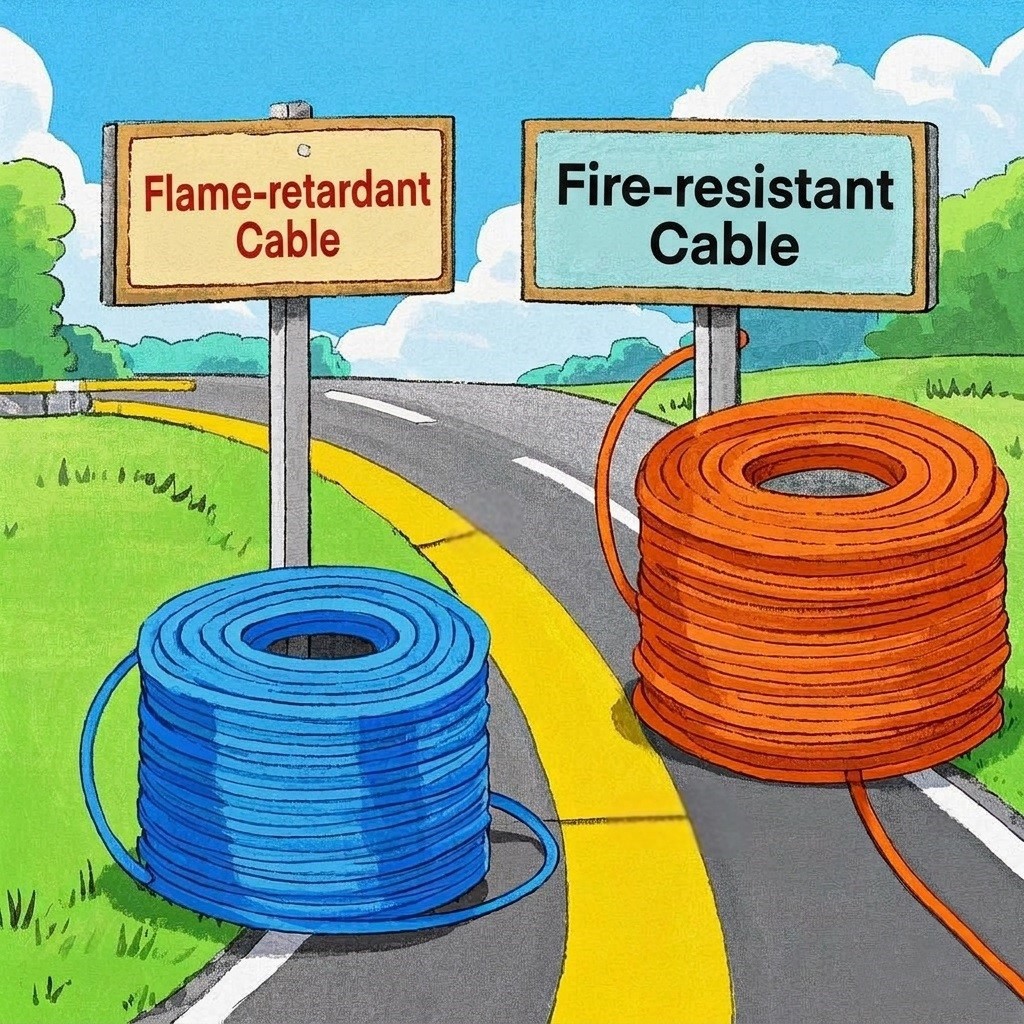
4.3 Differences between Flame Retardant and Fire Resistant Cables
People often confuse the concepts of flame retardant and fire resistant cables. Although flame retardant cables have many advantages suitable for chemical plants, such as low halogen and low smoke, under normal circumstances, a fire resistant cable can replace a flame retardant cable, but a flame retardant cable cannot replace a fire resistant cable.
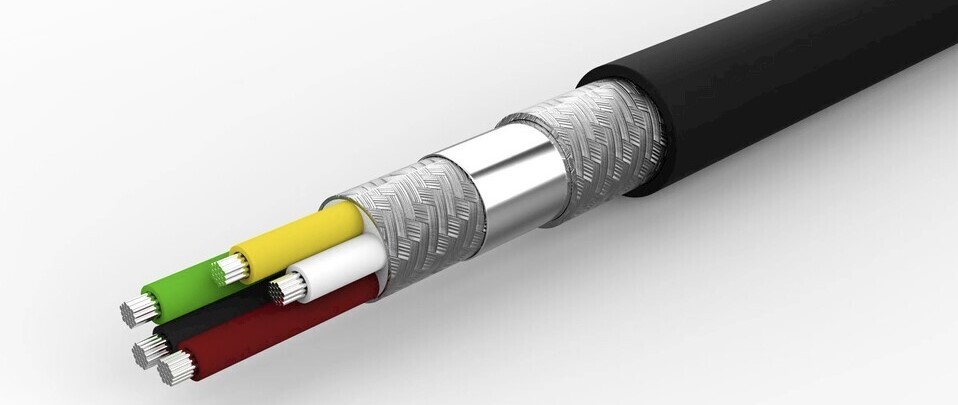
5. How to Choose the Correct Fire-proof Cable?
Ethernet cables with fire-resistant jackets are typically used indoors, such as CM, CMR, and CMP cables. CMX has the poorest fire performance and is typically designed for outdoor use.
|
Feature
|
CM
|
CMR
|
CMP
|
CMX
|
|
General Use
|
✅
|
✅
|
✅
|
✅
|
|
Riser (Non-Plenum Spaces)
|
❌
|
✅
|
✅
|
❌
|
|
In-Wall Use
|
❌
|
✅*
|
✅
|
❌
|
|
Plenum Spaces
|
❌
|
❌
|
✅
|
❌
|
|
Outdoor/Direct Burial*
|
❌
|
❌*
|
❌
|
✅
|
PVC vs. LSZH
When discussing Ethernet cables, PVC and LSZH are terms frequently mentioned. What do they refer to? These terms refer to the chemical compounds used in the manufacturing process of Ethernet cables.
Another factor to consider is the installation cost. Although CMP cables can be installed in any area, their high cost limits their use. CMP cables are the most expensive among these types, while CM cables are the most cost-effective. Choosing the appropriate cable jacket is crucial for achieving optimal cable performance.
6. Conclusion
In summary, these fire ratings should be selected based on different application environments and safety requirements to ensure that in the event of a fire, the cable does not become a path for flame propagation, while also minimizing the production of toxic smoke, protecting life and property.