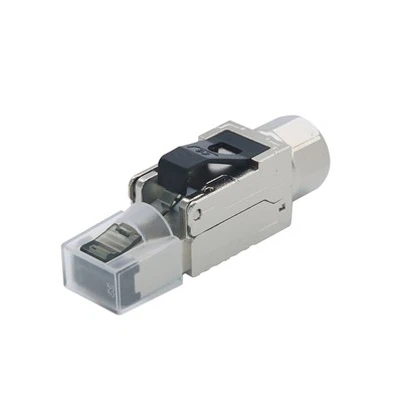

What is AWG Gauge?
Leave a message
What is AWG gauge? In today's article, we will discuss the diameter and AWG gauge parameters of network cable cores.
1. The AWG gauge in network cable specifications.
When purchasing network cables, you often see the AWG gauge, such as 26AWG and 24AWG, and sometimes 24AWG is labeled on the cables. Do you know what AWG means? AWG is not only used to indicate the gauge of network cables but also appears in video cables, HDMI cables, etc. Do you know there is a gauge comparison chart? AWG refers to the conductor grade and diameter of the network cable. AWG stands for American Wire Gauge, and yes, it's a standard set by the United States. It is a standard for distinguishing conductor diameters, also known as the Brown & Sharpe wire gauge. The number before AWG, such as 24AWG or 26AWG, indicates the number of holes the wire must pass through before forming its final diameter. The larger the number, the higher the grade of the hole the wire passes through, and the smaller the diameter of the wire. Remember, it's inversely proportional-the larger the number, the thinner the wire! Thicker wires have better physical strength and lower resistance.
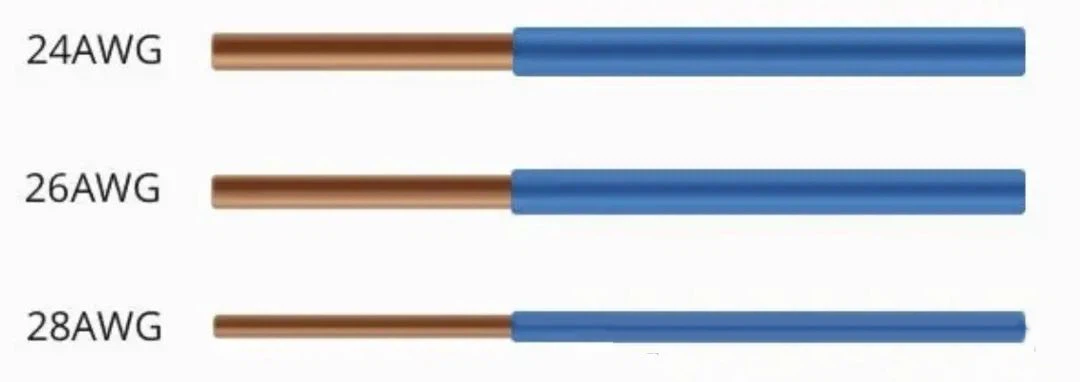
As we learned in middle school physics, the thicker the cable, the higher the current it can carry, and the lower the resistance. However, thicker wires require more copper to make the cable, which makes the cable heavier, harder to install, and more expensive. The challenge in cable design is to use the smallest possible diameter of wire (to reduce cost and installation complexity) while ensuring the maximum capacity of the wire at the necessary voltage and frequency.
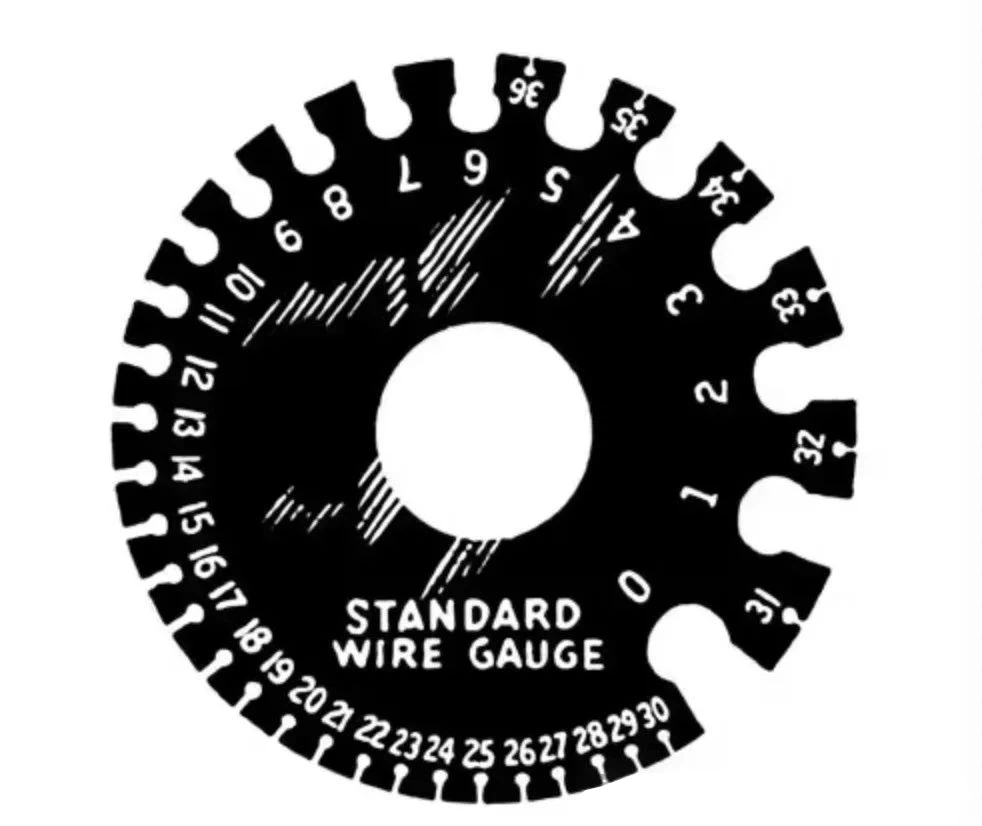
2. Usage scenarios for different wire gauges.
The AWG standard and core diameter sizes were established over a hundred years ago by the United States, and with technological advancements, the conductivity of wires has continuously improved. For wires, what's more important is their performance, especially the impedance measured in ohms. Therefore, the actual size of the wire can be slightly larger or smaller than the specification (usually slightly smaller).
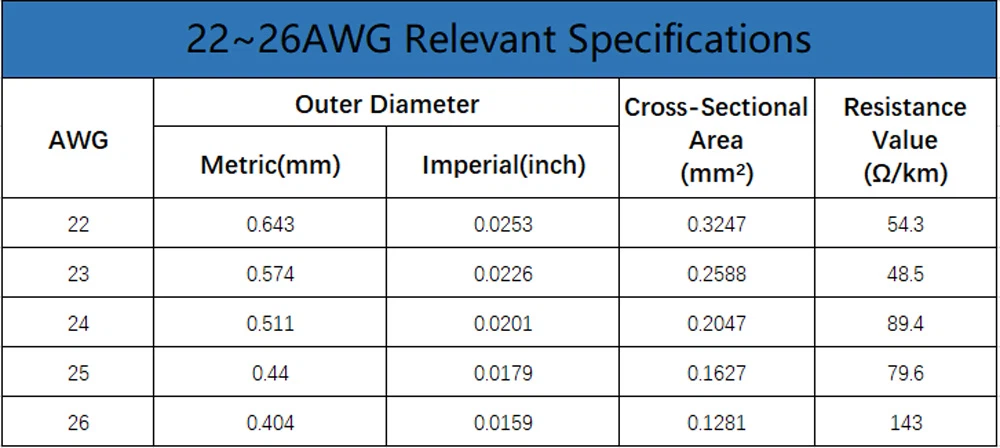
However, the diameter of the core must have limits; if it's too thin, even if it's a gigabit network cable, the transmission distance will be limited. The smaller the core, the smaller the cross-sectional area, which inevitably leads to greater resistance. Naturally, the current can't travel far. Could it be that 24AWG is suitable for CAT6, and 28AWG is used for ordinary CAT5e cables? There's no specification for this because when we talk about CAT5 or CAT6, we're mainly referring to their transmission frequency and bandwidth, which are certainly related to the wire diameter but also to the distance. It's not to say that thinner cables can't transmit high frequencies.
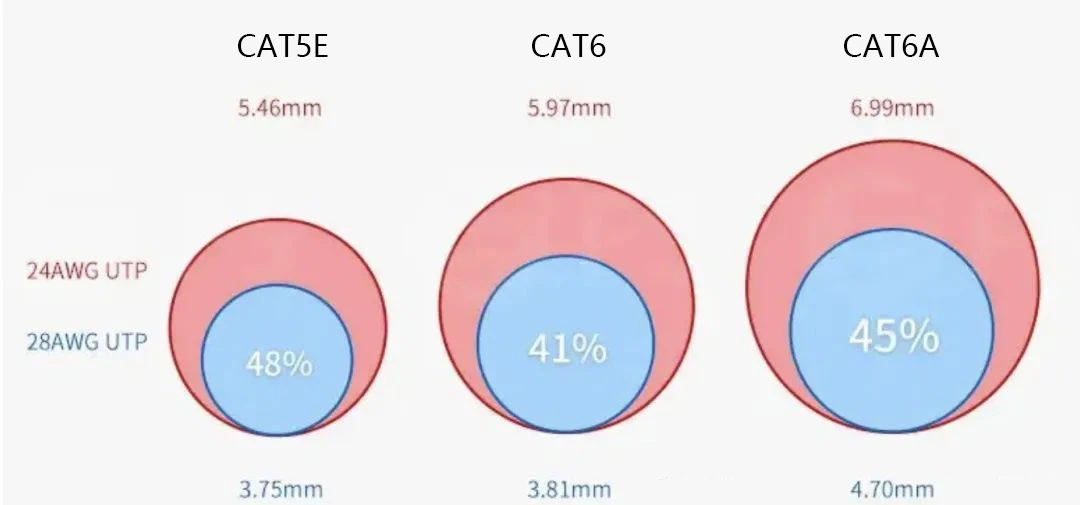
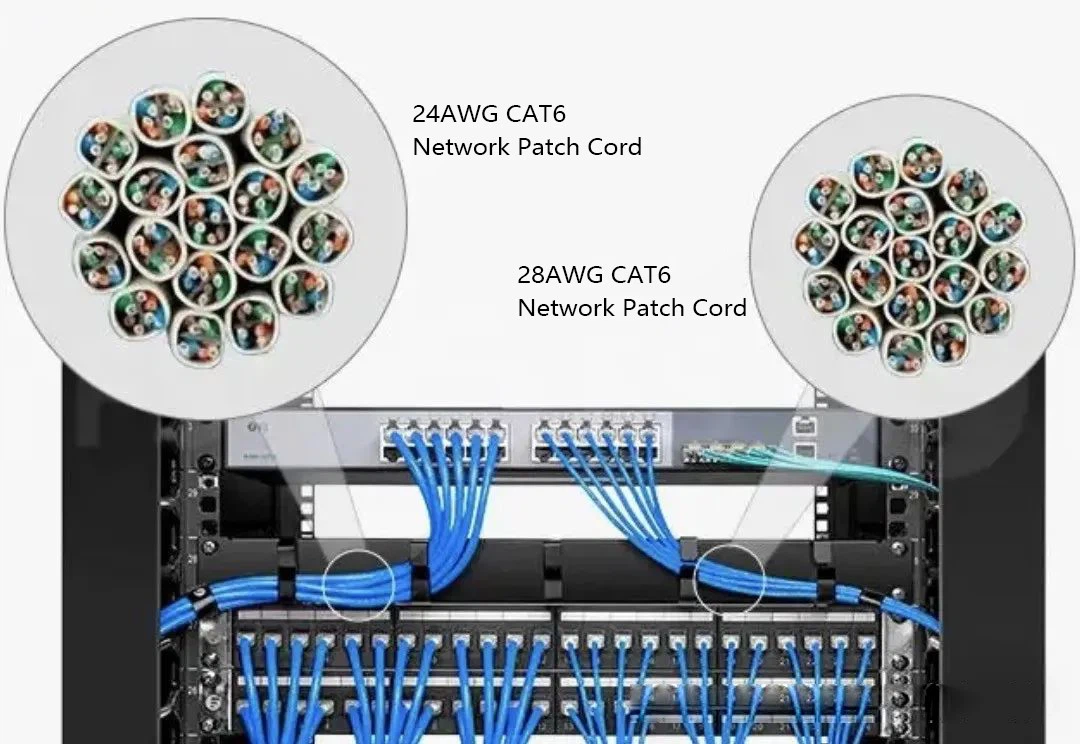
24AWG cables, due to their larger diameter, have a limited bending radius and require more space for cable routing, while 28AWG cables, with their smaller diameter and bending radius, are easier to install and require much less space for cable routing than 24AWG cables. The following image shows a comparison of the space occupied by a bundle of 24AWG CAT6 cables and a bundle of 28AWG CAT6 cables. With the same number of cables, 28AWG CAT6 cabling can effectively save 25% to 30% of cable routing space, greatly improving the utilization of cabinets, and is suitable for high-density cabling. For long-distance transmission, always opt for cables with thicker cores. For connections between cabinets, thinner-core cables are preferable for easier and more aesthetically pleasing cabling.
3. Conductor diameter tolerance.
The core tolerance of network cables refers to the deviation in the cross-sectional size of the core due to various factors (such as materials, processes, etc.) during the manufacturing of network cables, which cannot be kept completely consistent and has a certain range of deviation. This deviation represents the plus and minus tolerance. Tolerance is usually expressed as a percentage, for example, the positive tolerance range for the core diameter of a 100M network cable is 0.011mm to 0.015mm, and the negative tolerance range is -0.003mm to -0.007mm, with both positive and negative tolerances being 5%. This standard for core tolerance is crucial for ensuring the performance and stability of network cables. According to relevant standards, the diameter of network cable cores is allowed a certain tolerance range to ensure compatibility and reliability during manufacturing and installation.

Larger diameter tolerances can result in a decline in the quality of network cable terminal connections, thereby affecting the signal quality of the network cable. An excessively large diameter can cause terminal pressure to concentrate on a few small points, which can easily lead to core deformation, cutting, and other issues. Conversely, an excessively small diameter may cause excessive concentration of connection stress, leading to signal interference, disconnection, and other problems. The tolerance of the network cable core is the range of deviation of its diameter size from the standard size. The smaller the core diameter, the higher the requirement for tolerance in the manufacturing process. Currently, widely used network cable standards include TIA/EIA-568-B, ISO/IEC11801, and GB/T50311, among others, which have slightly different requirements for network cable core tolerances but are fundamentally the same. Typically, the tolerance range for network cable cores is 0.005 to 0.02 inches (0.13 to 0.51 millimeters). Among these, 0.01 inches (0.25 millimeters) is a more common standard.