
What is A Array Cabinet?
Mar 08, 2024
Leave a message
Array cabinets are used to distribute and manage one or more arrays of cabinets in the same room and come with protective features. In environments such as power control rooms, communication equipment rooms, and large data centers, array cabinets are both necessary and essential.

I. what is A array cabinet and Basic Concept of Array Cabinets
An array cabinet refers to the cabinet positioned at the top end of a row of cabinet equipment (the first position, akin to the "head") and is commonly called an array cabinet. It is typically composed of a cabinet body and its accompanying components. The cabinet body consists of a skeleton, front and rear doors (single-sided array cabinets lack rear doors, thus requiring a back panel), side panels, top panels, and base panels. Array cabinets are designed with protective functions.
Array cabinets can be classified based on their installation location into head cabinets, middle cabinets, and tail cabinets, and are distinguished further as either high-voltage array cabinets or low-voltage array cabinets.
The specific environmental conditions and appearance requirements for array cabinets are as follows:
Environmental Conditions
□ Operational temperature: -5~+40℃.
□ Relative humidity: ≤85%RH (at 25±5℃).
□ Altitude: ≤1000m. If the altitude exceeds 1000m, usage should be derated in accordance with general semiconductor converter requirements and electric grid commutation converter stipulations.
□ Vertical inclination: ≤2°.
□ Operational temperature: -5~+40℃.
□ Relative humidity: ≤85%RH (at 25±5℃).
□ Altitude: ≤1000m. If the altitude exceeds 1000m, usage should be derated in accordance with general semiconductor converter requirements and electric grid commutation converter stipulations.
□ Vertical inclination: ≤2°.
Appearance Requirements
□ The cabinet's coating should be smooth and even in color, without drips or exposure of the underlying surface; metal parts should have no burrs or rust.
□ The door panels and side panels of the cabinet should be flat, without warping, deformation, or significant shaking; openings in the door panel should be uniform.
□ Markings on the cabinet should be complete, clear, consistently colored, and durable. Tags or spaces for sequencing should be designated on the upper front and rear of the cabinet, and locations for marking array numbers should be provided on the outward-facing side panels of the head and tail cabinets.
□ Cabinets and their accessories, coatings, markings, decorations, etc., should be made from flame-retardant or non-combustible materials.
□ The cabinet's coating should be smooth and even in color, without drips or exposure of the underlying surface; metal parts should have no burrs or rust.
□ The door panels and side panels of the cabinet should be flat, without warping, deformation, or significant shaking; openings in the door panel should be uniform.
□ Markings on the cabinet should be complete, clear, consistently colored, and durable. Tags or spaces for sequencing should be designated on the upper front and rear of the cabinet, and locations for marking array numbers should be provided on the outward-facing side panels of the head and tail cabinets.
□ Cabinets and their accessories, coatings, markings, decorations, etc., should be made from flame-retardant or non-combustible materials.
II. Low-voltage Array Cabinets
Low-voltage array cabinets can be classified into network array cabinets, KVM array cabinets, server array cabinets, etc.
(1) Network Array Cabinets
Network array cabinets are used to house computer equipment, data network equipment or related devices and provide an environment for information networks, power supply, cooling and other requirements necessary for equipment operation, in a fully enclosed or semi-enclosed cabinet body, also known as server cabinets or racks. These usually adhere to the 19-inch standard rack size, meaning the cabinet width is 600mm, and the devices' panel width is 19 inches (482.6mm) and the height is in multiples of 1U (44.45mm). In rare cases, a 23-inch standard rack is also used. Cabinets can be custom-made to specific dimensions if required. The external shape of the cabinet is as shown in Figure 1.
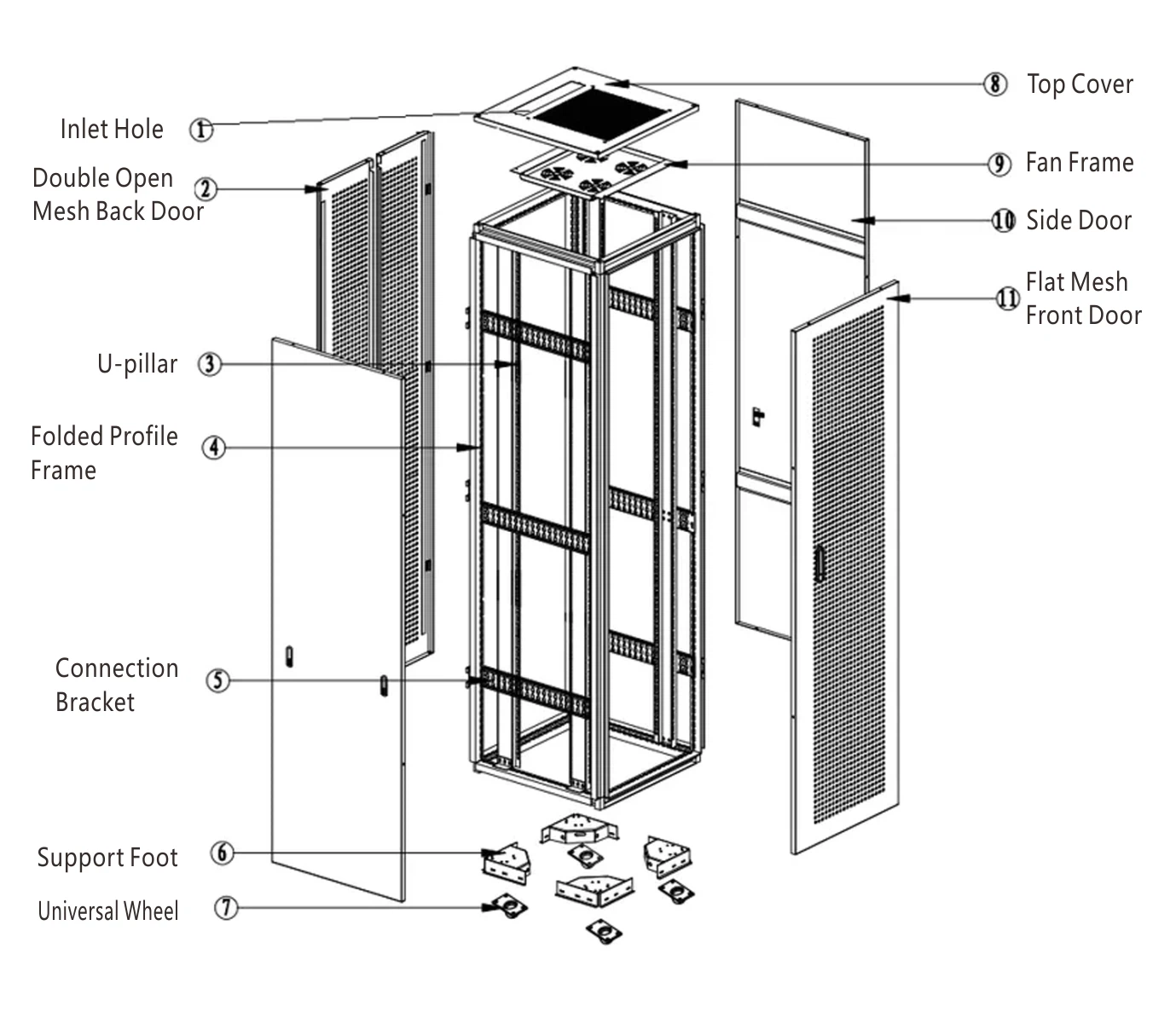
Figure 1 Cabinet External Shape Schematic
1)Features of Network Array Cabinets
□ Designed with a rational structure and the idea of mass demand;
□ Excellent ventilation properties, with vented front doors and corresponding rear doors;
□ Mainly designed for communications and data;
□ Made entirely from high-quality cold-rolled steel, ensuring evenly distributed stress;
□ The whole cabinet is electrostatically powder-coated;
□ The welded frame structure offers better load-bearing;
□ A demountable and fully open structure, which makes transportation, installation, and maintenance convenient, with beautifully designed smooth curves and easily detachable.
□ Excellent ventilation properties, with vented front doors and corresponding rear doors;
□ Mainly designed for communications and data;
□ Made entirely from high-quality cold-rolled steel, ensuring evenly distributed stress;
□ The whole cabinet is electrostatically powder-coated;
□ The welded frame structure offers better load-bearing;
□ A demountable and fully open structure, which makes transportation, installation, and maintenance convenient, with beautifully designed smooth curves and easily detachable.
2)Components of Network Array Cabinets
The primary frame of the network array cabinet is made of high-quality cold-rolled steel plate welded integrally, with a generous appearance. It allows for both top and bottom wiring, and it's fitted with a heat-dissipation fan on the top to aid the cooling of active equipment. Depending on the capacity, there are sizes like 6U, 9U, 12U, 16U, 18U, 20U, etc.
Network cabinets generally consist of a cabinet body and attached parts; the body includes a frame, mounting posts, front and back doors, side panels, top panels, bottom panels, and shelves. Accessories include a power distribution unit, network interfaces, cable troughs, locks, baffle plates, seal components, fans, etc.
Network cabinets generally consist of a cabinet body and attached parts; the body includes a frame, mounting posts, front and back doors, side panels, top panels, bottom panels, and shelves. Accessories include a power distribution unit, network interfaces, cable troughs, locks, baffle plates, seal components, fans, etc.
3)Classification of Network Array Cabinets
□ Network array cabinets can be classified according to different air-conditioning cooling methods into front intake, bottom intake, and top intake cabinets.
□ Based on the presence and the sealing degree of cabinet doors, network array cabinets can be classified as closed, semi-closed, and open array cabinets.
□ Depending on the type of power used, network array cabinets can be categorized as AC 220V, AC 380V, DC 48V, and DC 240V network array cabinets.
□ Depending on the entry points of communication cables and power cables into the cabinet, network array cabinets can be classified as top wiring, bottom wiring, and top and bottom wiring cabinets.
□ Based on the presence and the sealing degree of cabinet doors, network array cabinets can be classified as closed, semi-closed, and open array cabinets.
□ Depending on the type of power used, network array cabinets can be categorized as AC 220V, AC 380V, DC 48V, and DC 240V network array cabinets.
□ Depending on the entry points of communication cables and power cables into the cabinet, network array cabinets can be classified as top wiring, bottom wiring, and top and bottom wiring cabinets.
4)Size, Structure, and Configuration of Network Array Cabinets
4.1)Dimensions of Network Array Cabinets
□ Cabinet heights typically vary among 2000mm, 2200mm, 2400mm, and 2600mm, with 2200mm being the recommended size. The height of cabinets with bottom intake should not exceed 2200mm.
□ The recommended cabinet width is 19 inches (600mm), with 23 inches (800mm) as an alternative in special circumstances.
□ Standard cabinet depths include 800mm, 900mm, 1000mm, 1100mm, and 1200mm. Cabinets with bottom intake should have a depth no less than 1100mm, with 1100mm recommended; front intake cabinets should not exceed a depth of 1100mm, with 1000mm recommended.
□ The recommended cabinet width is 19 inches (600mm), with 23 inches (800mm) as an alternative in special circumstances.
□ Standard cabinet depths include 800mm, 900mm, 1000mm, 1100mm, and 1200mm. Cabinets with bottom intake should have a depth no less than 1100mm, with 1100mm recommended; front intake cabinets should not exceed a depth of 1100mm, with 1000mm recommended.
4.2)Basic Structure of Network Array Cabinets
The essential structure of network array cabinets consists of a framework, front and rear doors, side panels, a top plate, a base plate, and corresponding locating and fastening components. Inside the cabinet, columns for mounting, shelves, as well as systems for air inflow and outflow, and power distribution equipment can be installed. The bottom-to-top air inflow cabinet structure is demonstrated in the schematic below. The fundamental structure of the frontal air inflow and top air inflow cabinets is similar to that of the bottom-to-top air inflow cabinet and can also refer to the schematic below.

Figure: Schematic Representation of a Bottom-to-Top Air Inflow Cabinet's Basic
Structure
The construction of the network array cabinet should be robust, allowing both the bottom and top to be securely fixed in place, thereby supporting the load of overhead cables and structural components. All individual parts, as well as the internal and external overall structure, should exhibit sufficient rigidity and toughness to prevent any wobbling or deformation after equipment installation. The cabinet body and internal installation components such as mounting columns and shelves should meet seismic resistance requirements.
The frame of the network array cabinet is made from cold-rolled steel plates or aluminum alloy profiles, while the side panels, front and rear doors, shelves, and reinforced top and bottom structures utilize either cold-rolled steel plates or materials of superior performance.
The assembly of the network array cabinet should maintain consistency and interchangeability, with components and fastening elements utilizing standard and generic parts to their fullest extent without any looseness. Exposed parts and operational areas should be smooth without sharp edges or burrs.
The doors and side panels of the network array cabinet are designed to be detachable, making them flexible to open and close, ensuring a reliable lock, and facilitating construction installation and maintenance.
The cabinet doors should open to an angle no less than 110 degrees; the disassembly and assembly of the side panels should not affect the overall width of the cabinet.
Both the front and rear doors of the network array cabinet should be outward opening, with the front door being a single door, and the rear door either a single door or symmetrical double doors; they come with locks and can be replaced with separate locks according to user needs, if necessary.
Network array cabinets can be installed adjacently, and should come equipped with connectors for cabinet coupling as standard.
The construction of the network array cabinet should be robust, allowing both the bottom and top to be securely fixed in place, thereby supporting the load of overhead cables and structural components. All individual parts, as well as the internal and external overall structure, should exhibit sufficient rigidity and toughness to prevent any wobbling or deformation after equipment installation. The cabinet body and internal installation components such as mounting columns and shelves should meet seismic resistance requirements.
The frame of the network array cabinet is made from cold-rolled steel plates or aluminum alloy profiles, while the side panels, front and rear doors, shelves, and reinforced top and bottom structures utilize either cold-rolled steel plates or materials of superior performance.
The assembly of the network array cabinet should maintain consistency and interchangeability, with components and fastening elements utilizing standard and generic parts to their fullest extent without any looseness. Exposed parts and operational areas should be smooth without sharp edges or burrs.
The doors and side panels of the network array cabinet are designed to be detachable, making them flexible to open and close, ensuring a reliable lock, and facilitating construction installation and maintenance.
The cabinet doors should open to an angle no less than 110 degrees; the disassembly and assembly of the side panels should not affect the overall width of the cabinet.
Both the front and rear doors of the network array cabinet should be outward opening, with the front door being a single door, and the rear door either a single door or symmetrical double doors; they come with locks and can be replaced with separate locks according to user needs, if necessary.
Network array cabinets can be installed adjacently, and should come equipped with connectors for cabinet coupling as standard.
4.3)Internal Structure of Network Array Cabinets.
The interior of the network array cabinet should have 4 or 6 mounting columns to install equipment and secure the shelves, which can be adjusted forward and backward. The spacing between columns and the hole spacing, along with other internal dimensions of the cabinet, should meet user requirements.
The internal shelves of the network array cabinet have a depth of 600mm±5mm. The standard shelf can bear a weight of ≥40kg, while the reinforced shelf can bear ≥80kg. Shelves should be easy to fit and remove, with adjustable mounting heights and front-to-back positions. The method of shelf fixation can vary based on user needs and could include screws, spring pins, or latch fasteners.
The effective mounting depth for equipment inside the network array cabinet should be ≥720mm.
The internal shelves of the network array cabinet have a depth of 600mm±5mm. The standard shelf can bear a weight of ≥40kg, while the reinforced shelf can bear ≥80kg. Shelves should be easy to fit and remove, with adjustable mounting heights and front-to-back positions. The method of shelf fixation can vary based on user needs and could include screws, spring pins, or latch fasteners.
The effective mounting depth for equipment inside the network array cabinet should be ≥720mm.
4.4) Supplementary Configuration of Network Array Cabinets
On both the left and right sides of the rear part of the network array cabinet, one edge trimming board or wire trough is set up for laying out and binding communication cables and power lines; all cable management components should be adequately planned and full of utility, facilitating ease of operation.
(2) KVM Array Cabinets
KVM array cabinets share the same features, composition, classification, technical requirements, dimensions, structure, and configuration as network array cabinets and are installed with KVM equipment.
(3) Server Array Cabinets
Server array cabinets are similar to network array cabinets in terms of features, composition, classification, technical requirements, dimensions, structure, and configuration, and are installed with KVM servers.
III. High-Voltage Power Array Cabinets
High-voltage power array cabinets can be categorized into types such as general power array cabinets, AC/DC power array cabinets, and precision distribution array cabinets.
(1) Basic Concept of High-Voltage Power Array Cabinets
1) Composition of Power Distribution Array Cabinets.
Generally, a power distribution cabinet is made up of the cabinet itself and supplementary components. The cabinet consists of a framework, front and rear doors (single-sided cabinets don't have a rear door, but do possess a back panel), side panels, a top plate, and a base plate. Supplementary components include input power distribution modules, branch output modules, neutral busbars, ground busbars, signal output interfaces, electric metering modules, data display devices, door locks, and supporting legs.
2) Classification of Power Distribution Array Cabinets.
Power distribution cabinets can be classified by their installation position into head cabinets, intermediate cabinets, and end cabinets.Based on the orientation and number of doors and control surfaces, they can be divided into single-sided cabinets and double-sided cabinets. It is appropriate to use single-sided cabinets as head or end cabinets.Power distribution cabinets can also be categorized by the number of independent power circuits they manage into single-circuit cabinets and dual-circuit cabinets.
3) Working Principle of Power Distribution Cabinets.
When the 380V (or 220V) AC input power enters the cabinet, the live wire is connected to the main circuit breaker through a "windowed copper terminal." From there, the power flows through the main circuit breaker → current transformer → busbar → several branch circuit breakers → the corresponding terminal blocks on the output module → to the user's load. The ground wire, upon entering the cabinet, connects to the main circuit breaker through a "windowed copper terminal" → then to the ground copper bar on the output module, and through the corresponding terminal blocks of the ground copper bar → to the user's load, completing the distribution of the AC power supply. The terminal blocks on the output module gather the on/off electrical signals from the branch circuit breakers and send them to the centralized sampling box and then to the electrical control panel, providing indication and alarm features for each branch's power continuity.
4) Main Features of Power Distribution Array Cabinets.
The bodies of power distribution cabinets are crafted from high-quality cold-rolled steel plates with electrostatic spray finishing, creating an aesthetically pleasing appearance.These cabinets employ modular and standardized designs for power distribution, which allows for flexible configuration and convenient manufacturing.Cabling inside the cabinet is designed to be convenient, reliable, beautifully arranged, and aesthetically pleasing.Advantages of power distribution cabinets include convenient customer-managed input and output line management and full front access for operations.A unique design offers the possibility of live expansion.They have built-in short circuit protection for AC inputs.The cabinets are equipped with lightning protection devices.Aural and visual alarm functions include branch alarms, overvoltage alarms, undervoltage alarms, and lightning protection alarms.Display features include LCD displays, dual-color branch indicator lights, alarm lights, and operation lights.Each branch has corresponding identification numbers, indicator lights, and convenient labeling for clients.Data retention: When a power outage occurs, all of the cabinet's settings and status parameters from before the fault are automatically saved. Once power is restored, these parameters automatically return to their previous states.They come with an RS232 interface for centralized monitoring of the power cabinet.
5) Environmental Conditions Requirements for Power Distribution Array Cabinets.
5.1) General Requirements for Power Array Cabinets.
□ Power cabinets must have a complete set of detachable and replaceable fixed power distribution units (PDUs) for the supply of power input, distribution, protection, connection/disconnection, and receptacles (sockets or terminals). It's not advisable to use both AC and DC distribution within the same cabinet (excluding cabinet cooling fan distribution).
5.2) Structural and Installation Requirements for Power Array Cabinets.
□ The power distribution unit of the cabinet should ideally adopt a vertically integrated, strip-like structure that combines distribution, protection, and receptacle functionalities, with a detachable front for easy installation or replacement of modules and cable connections.
□ A separate design is adopted for the power cabinet, where the power input, distribution, and protection parts are placed in the upper or lower part of the equipment, while the receptacle parts remain in a vertically arranged strip unit.
5.3) Environmental Conditions for Power Array Cabinets
□ Operating temperature: -5~+40°C.
□ Relative humidity: ≤85%RH (at 25±5°C).
□ Altitude: ≤1000m. At altitudes higher than 1000m, derating should be applied according to general requirements for semiconductor converters and power grid commutation converters.
□ Vertical inclination: ≤25%.
□ Atmospheric pressure: 70~106kPa.
□ Relative humidity: ≤85%RH (at 25±5°C).
□ Altitude: ≤1000m. At altitudes higher than 1000m, derating should be applied according to general requirements for semiconductor converters and power grid commutation converters.
□ Vertical inclination: ≤25%.
□ Atmospheric pressure: 70~106kPa.
5.4) Basic Requirements for Power Array Cabinets
Power distribution cabinets should comply with the relevant technical requirements of YD/T 585.
Materials and Components used in power distribution cabinets (fasteners, seals) should pass mechanical, chemical, and electrical performance tests according to Chinese national standards, communication industry standards, and IEC-related standards.
Creepage distances and electrical clearances between conductive parts and between conductive or grounded components inside the cabinets must meet GB/T 3797-2005 standards.
The temperature rise of all electrical components and parts in the power distribution cabinets when supplied with the rated current must meet the corresponding requirements of YD/T 585.
Power distribution cabinets should have lightning and surge protection devices, with protection levels meeting Class 2 requirements of YD/T 944.
Materials and Components used in power distribution cabinets (fasteners, seals) should pass mechanical, chemical, and electrical performance tests according to Chinese national standards, communication industry standards, and IEC-related standards.
Creepage distances and electrical clearances between conductive parts and between conductive or grounded components inside the cabinets must meet GB/T 3797-2005 standards.
The temperature rise of all electrical components and parts in the power distribution cabinets when supplied with the rated current must meet the corresponding requirements of YD/T 585.
Power distribution cabinets should have lightning and surge protection devices, with protection levels meeting Class 2 requirements of YD/T 944.
5.5) Exterior Structure of Power Array Cabinets
□ The dimensions of power distribution cabinets should coordinate with those of network cabinets, mainly based on the network cabinets' size and output capacity.
□ The structural design of power distribution cabinets should ensure safe and reliable operation and maintenance, and the heat, arcs, impacts, vibrations, and magnetic or electric fields generated by electrical components during operation should not affect other components' normal functioning.
□ Power distribution cabinets should use a fully enclosed structure, including side panels, a base, top, and front and rear doors (single-sided cabinets should have a back panel instead of a rear door).
□ The structural components' exterior should be flat and smooth, with uniform and solid welding points that are free of cracks, slag, distortion, or burning through.
□ The cable entry and exit method for power distribution cabinets should preferably be from top to top, with at least one rectangular entry port that is 80mm*500mm.
□ The cabinet should use a double-door structure for the top and bottom sections (single or double doors are optional for cabinets less than 850mm wide; for cabinets wider than 850mm, double doors should be used for both top and bottom sections), and the doors should open flexibly at an angle no less than 90°.
□ The surface of power distribution cabinets should be coated with a non-glare layer and be neat, even-colored, free of drips or exposure, with all metal parts being free of burrs and rust.
□ The wiring within power distribution cabinets needs to be rational, with correct connections at each live wire terminal and clear hazard marking.
□ Power distribution cabinets and their components, coatings, markings, and decorations should all use flame-retardant or non-flammable materials.
□ The structural design of power distribution cabinets should ensure safe and reliable operation and maintenance, and the heat, arcs, impacts, vibrations, and magnetic or electric fields generated by electrical components during operation should not affect other components' normal functioning.
□ Power distribution cabinets should use a fully enclosed structure, including side panels, a base, top, and front and rear doors (single-sided cabinets should have a back panel instead of a rear door).
□ The structural components' exterior should be flat and smooth, with uniform and solid welding points that are free of cracks, slag, distortion, or burning through.
□ The cable entry and exit method for power distribution cabinets should preferably be from top to top, with at least one rectangular entry port that is 80mm*500mm.
□ The cabinet should use a double-door structure for the top and bottom sections (single or double doors are optional for cabinets less than 850mm wide; for cabinets wider than 850mm, double doors should be used for both top and bottom sections), and the doors should open flexibly at an angle no less than 90°.
□ The surface of power distribution cabinets should be coated with a non-glare layer and be neat, even-colored, free of drips or exposure, with all metal parts being free of burrs and rust.
□ The wiring within power distribution cabinets needs to be rational, with correct connections at each live wire terminal and clear hazard marking.
□ Power distribution cabinets and their components, coatings, markings, and decorations should all use flame-retardant or non-flammable materials.
5.6) Power Distribution Requirements of Power Array Cabinets
□ Power distribution cabinets must fulfill the requirement to provide completely independent dual-circuit power supplies for one or more columns of network cabinets.
□ For dual-circuit cabinets, each circuit should have its own neutral busbar and not be interconnected or shared.
□ The number of output branch circuits in a power distribution cabinet should meet the requirements of the number and capacity of the served network cabinets.
□ For dual-circuit cabinets, each circuit should have its own neutral busbar and not be interconnected or shared.
□ The number of output branch circuits in a power distribution cabinet should meet the requirements of the number and capacity of the served network cabinets.
5.7) Rated Values:
□ Rated voltage: AC three-phase five-wire 380V.
□ Rated frequency: 50Hz.
□ Single input (total) rated current (A): (50), 63, 80, 100, 160, (225), (250).
□ Output branch rated current (A): (10), 16, 20, 25, (32).
Note: Values in parentheses suggest less common choices, yet are available upon special request.
□ Rated frequency: 50Hz.
□ Single input (total) rated current (A): (50), 63, 80, 100, 160, (225), (250).
□ Output branch rated current (A): (10), 16, 20, 25, (32).
Note: Values in parentheses suggest less common choices, yet are available upon special request.
6) Electrical Performance of Power Distribution Cabinets
□ Insulation resistance: The insulation resistance between each conductive circuit and between each conductor and the chassis (or ground) should be 230MΩ.
□ Dielectric strength: AC2500V, 50Hz, 1min, without breakdown, no arcing.
□ Rated voltage for AC power distribution equipment: 380V or 220V.
□ Dielectric strength: AC2500V, 50Hz, 1min, without breakdown, no arcing.
□ Rated voltage for AC power distribution equipment: 380V or 220V.
7) Structure of Power Array Cabinets
□ Front electrical components of power distribution cabinets: The upper middle front panel of the cabinet houses four types of alarm indicator lights (branch, overvoltage, undervoltage, and surge protection), an LCD display module, and membrane toogle switches. Buzzers and power indicator lights are mounted on the front of the cabinet's top frame.
□ Composition of the monitoring system for power distribution cabinets: The monitoring system consists of a sampling board, rectifier board, control board, LCD display module, membrane switch, LCD indicator light panel, power working indicator light panel, alarm sampling line, and buzzer.
□ Power input lines for power distribution cabinets: Typically, dual power input is selected, and if one power system fails, the other automatically switches on to maintain continuous power supply. For short circuit and overload protection, molded case circuit breakers are used in front of the dual power sources, providing short circuit and overload protection, as well as isolation features for convenient maintenance.
□ The intelligent monitoring system of power distribution cabinets allows monitoring, alarming, and statistical analysis of the switch status and load condition of the distribution system. Monitored input electrical parameters include: electricity, active power, reactive power, apparent power, power factor, three-phase voltage, current, frequency, etc. Monitored output branch electrical parameters include: rated current, actual current, load percentage, load current harmonic percentage, load electricity, power factor, etc. These monitoring details enable users to understand the operation status of each device, adjust load distribution timely, clearly comprehend each cabinet's power consumption, and provide reliable information for energy efficiency management and consumption reduction.
□ Composition of the monitoring system for power distribution cabinets: The monitoring system consists of a sampling board, rectifier board, control board, LCD display module, membrane switch, LCD indicator light panel, power working indicator light panel, alarm sampling line, and buzzer.
□ Power input lines for power distribution cabinets: Typically, dual power input is selected, and if one power system fails, the other automatically switches on to maintain continuous power supply. For short circuit and overload protection, molded case circuit breakers are used in front of the dual power sources, providing short circuit and overload protection, as well as isolation features for convenient maintenance.
□ The intelligent monitoring system of power distribution cabinets allows monitoring, alarming, and statistical analysis of the switch status and load condition of the distribution system. Monitored input electrical parameters include: electricity, active power, reactive power, apparent power, power factor, three-phase voltage, current, frequency, etc. Monitored output branch electrical parameters include: rated current, actual current, load percentage, load current harmonic percentage, load electricity, power factor, etc. These monitoring details enable users to understand the operation status of each device, adjust load distribution timely, clearly comprehend each cabinet's power consumption, and provide reliable information for energy efficiency management and consumption reduction.
(2) Power Distribution Array Cabinets for General Power Supplies
Power distribution array cabinets for general power supplies are mainly used in telecommunication rooms and transmission equipment rooms, installed at the head or tail of equipment rows to distribute power to communication and network equipment.
Features of general power distribution cabinets:
The cabinet's interior adopts a unitized design, which is neat and aesthetically pleasing. The general cabinets feature glass doors for a direct and reliable view. Cable entrance holes are present at both the top and bottom of the cabinet to facilitate cable routing from above via the room's cable tray or from below through the cable trench.
The use of high-reliability circuit breakers eliminates the shortcomings of fuse protection, greatly reducing the downtime for troubleshooting and ensuring the safe and reliable operation of equipment.
The cabinets provide overload and short-circuit protection for each branch circuit, ensuring stable and reliable performance.
A standard power distribution cabinet can supply up to 96 branch circuits, utilizing terminal outputs.
The cabinets have a common neutral bar and grounding bar to ensure effective grounding.
(3) AC/DC Power Distribution Array Cabinets
AC/DC power distribution cabinets are key physical infrastructures in server rooms and are a principal component of the power supply distribution across different layers and rows within the server room. When developing the overall technical solutions and selecting equipment, it is advisable to follow the principle of ensuring coordination between immediate construction scale and long-term development plans to meet future data service growth.
The design and installation of AC/DC power distribution cabinets must comply with national technical policies and current standards for fire safety, electrical safety, earthquake resistance, environmental protection, and energy savings.
1)Basic Requirements for AC/DC Power Distribution Array Cabinets
Technical requirements for AC power distribution cabinets are applicable to three-phase five-wire system AC low-voltage power equipment with a rated voltage of 380V and operating frequency of 50Hz. DC power distribution cabinet requirements are suitable for DC -48V power supplies, with a range of -40--57V, where the working and protective ground bars are clearly distinguished.
2)Environmental and Installation Requirements for AC/DC Power Distribution Array Cabinets:
□ Ambient temperature should be between 0~40°C, with an average temperature not exceeding 35°C within 24 hours; relative humidity ≤90% at 20±5°C.
□ Altitude should be ≤2000m.
□ Equipment should be installed indoors, away from severe vibrations and shocks, with a maximum inclination angle of 5 degrees from the ground.
□ The working environment must be free of conductive explosive dust, corrosive metals, and gases or vapors that can damage insulation.
□ Requirements for the input power grid include frequency variation ≤5%; voltage waveform sine distortion rate ≤5%, and allowable voltage fluctuation range of 85%~110% of the rated voltage value.
□ Users should choose the cabinet installation location based on the actual situation, ensuring space for the front and back doors of the cabinet to open, and maintaining sufficient space for maintenance and wiring operations.
□ Altitude should be ≤2000m.
□ Equipment should be installed indoors, away from severe vibrations and shocks, with a maximum inclination angle of 5 degrees from the ground.
□ The working environment must be free of conductive explosive dust, corrosive metals, and gases or vapors that can damage insulation.
□ Requirements for the input power grid include frequency variation ≤5%; voltage waveform sine distortion rate ≤5%, and allowable voltage fluctuation range of 85%~110% of the rated voltage value.
□ Users should choose the cabinet installation location based on the actual situation, ensuring space for the front and back doors of the cabinet to open, and maintaining sufficient space for maintenance and wiring operations.
3)Technical Requirements for AC/DC Power Distribution Array Cabinets:
□ Equipment should be made of materials like steel that can withstand mechanical, electrical, and thermal stresses; these materials should possess anti-corrosion properties or be appropriately surface-treated.
□ Under normal load conditions, the equipment should operate normally when the frequency varies within 98%~102% of the rated frequency.
□ Electrical components within the equipment should comply with relevant regulations and maintain their electrical clearances and creepage distances under normal conditions.
□ External conductor terminals: During normal operation or in the event of a short circuit, terminals should be able to connect reliably with external copper or aluminum conductors; sufficient space should be allowed for connecting external conductors of specified materials. Stress that could reduce the normal lifespan of conductors is not permitted.
□ When the AC distribution cabinet carries the rated current, the temperature rise of each electrical component and part should not exceed the limits specified in Table 1.
□ Under normal load conditions, the equipment should operate normally when the frequency varies within 98%~102% of the rated frequency.
□ Electrical components within the equipment should comply with relevant regulations and maintain their electrical clearances and creepage distances under normal conditions.
□ External conductor terminals: During normal operation or in the event of a short circuit, terminals should be able to connect reliably with external copper or aluminum conductors; sufficient space should be allowed for connecting external conductors of specified materials. Stress that could reduce the normal lifespan of conductors is not permitted.
□ When the AC distribution cabinet carries the rated current, the temperature rise of each electrical component and part should not exceed the limits specified in Table 1.

Table 1: Temperature rise for each electrical component and part
4) Electrical Performance of AC/DC Power Distribution Array Cabinets
The electrical performance of AC/DC power distribution cabinets array is shown in Table 2.
Table 2 Electrical performance of AC/DC power distribution array cabinets
|
Index Items
|
Technical Index
|
Test Condition
|
Remarks
|
|
Insulation Resistance
|
≥10MΩ
|
Disconnected from all loads and input power
|
Measurements taken between the two conductors of the AC power supply circuit and between any conductor and the chassis
|
|
Dielectric Strength
|
No breakdown or flashover after 1 minute
|
Test Voltage: 1000V, 50Hz, disconnected from all loads and input power
|
Measurements taken between the two conductors of the AC power supply circuit and between any conductor and the chassis
|
|
Overvoltage Alarm
|
+10% of rated voltage
|
Default value
|
_
|
|
Undervoltage Alarm
|
-15% of rated voltage
|
Default value
|
_
|
|
Overcurrent Alarm
|
>rated current
|
Default value
|
_
|
|
Input Voltage
|
380V
|
_
|
Total input is three-phase five-wire system
|
|
Output Voltage
|
380V
|
_
|
Voltage of each distribution circuit
|
5) Power Supply Types of AC/DC Power Distribution Array Cabinets
5.1) AC Power Supply
□ AC Power Supply: Input 380V, output 380V or 220V.
□ Current Capacity: The total supply current capacity of the AC distribution cabinet and the distribution of branch circuit power capacities comply with standard requirements.
□ The phase wires LI, L2, and L3 output terminals of the main (master route) power supply circuit breaker are each connected to the input terminals of the branch modules, with the neutral wire terminal (N terminal) of the main power supply directly connected to the equipment's neutral wire terminal (N terminal) distribution terminal input end (joined on a working ground copper bar assembly).
□ Branch power modules (branch switch components) consist of small capacity air circuit breakers (split between primary and backup), arranged side by side. Their input ends are in the form of pure copper bars, one end linked to a connection lug correlating to one of the three-phase output terminals of the main power supply circuit breaker, and the other end connected to all the input ends of the air circuit breakers within the main or backup route. Branch modules have anti-detachment devices to prevent switch error operations that might be caused by the detachment of the switch panel.
□ The cabinet is equipped with two independent neutral bars (working ground copper bar assemblies) to ensure that the two AC inputs do not interfere with each other.
□ The power distribution system of the cabinet has a two-stage circuit-breaking protection function: the main route circuit breaker is the first level of protection, and the air circuit breakers of the branch modules provide the second level; the input ends of the main route circuit breaker are equipped with connection lugs linked to cables; the output ends of the branch power (L terminal) can be configured according to the actual capacity.
□ Wires are color-coded according to the circuit. The colors for AC three-phase five-wire systems are-Phase A: yellow, Phase B: green, Phase C: red, neutral or common wire: light blue, safety ground wire: yellow-green.
□ Current Capacity: The total supply current capacity of the AC distribution cabinet and the distribution of branch circuit power capacities comply with standard requirements.
□ The phase wires LI, L2, and L3 output terminals of the main (master route) power supply circuit breaker are each connected to the input terminals of the branch modules, with the neutral wire terminal (N terminal) of the main power supply directly connected to the equipment's neutral wire terminal (N terminal) distribution terminal input end (joined on a working ground copper bar assembly).
□ Branch power modules (branch switch components) consist of small capacity air circuit breakers (split between primary and backup), arranged side by side. Their input ends are in the form of pure copper bars, one end linked to a connection lug correlating to one of the three-phase output terminals of the main power supply circuit breaker, and the other end connected to all the input ends of the air circuit breakers within the main or backup route. Branch modules have anti-detachment devices to prevent switch error operations that might be caused by the detachment of the switch panel.
□ The cabinet is equipped with two independent neutral bars (working ground copper bar assemblies) to ensure that the two AC inputs do not interfere with each other.
□ The power distribution system of the cabinet has a two-stage circuit-breaking protection function: the main route circuit breaker is the first level of protection, and the air circuit breakers of the branch modules provide the second level; the input ends of the main route circuit breaker are equipped with connection lugs linked to cables; the output ends of the branch power (L terminal) can be configured according to the actual capacity.
□ Wires are color-coded according to the circuit. The colors for AC three-phase five-wire systems are-Phase A: yellow, Phase B: green, Phase C: red, neutral or common wire: light blue, safety ground wire: yellow-green.
5.2) DC Power Supply
□ DC power supply is 48V, with a range of 40~57V; working ground bar and protective ground bar are distinctly separated from the AC power supply.
6) AC/DC Power Distribution Cabinets'Alarm Functions
□ The power distribution cabinet should have audible and visible alarm signals for overcurrent, overvoltage, undervoltage, blown fuse, switch-off, etc.
□ It should have a reoccurring alarm blocking function, i.e., if a new alarm is set off during the period when the original alarm signal has not been eliminated and the audible alarm has been manually turned off, the power cabinet will automatically issue an audible and visual alarm signal again.
□ Monitoring function: Equipped with an RS485 communication interface to realize remote monitoring. The power distribution cabinet's alarm system should be able to send alarm data to the upper level monitoring center and simultaneously sound an audible and visual alarm. Its communication interface and protocol should comply with the relevant provisions of YDN 023.
□ Remote measurement: AC three-phase voltage, total load current.
□ Remote signaling: AC output voltage overvoltage/undervoltage, branch circuit breaker fault detection.
□ It should have a reoccurring alarm blocking function, i.e., if a new alarm is set off during the period when the original alarm signal has not been eliminated and the audible alarm has been manually turned off, the power cabinet will automatically issue an audible and visual alarm signal again.
□ Monitoring function: Equipped with an RS485 communication interface to realize remote monitoring. The power distribution cabinet's alarm system should be able to send alarm data to the upper level monitoring center and simultaneously sound an audible and visual alarm. Its communication interface and protocol should comply with the relevant provisions of YDN 023.
□ Remote measurement: AC three-phase voltage, total load current.
□ Remote signaling: AC output voltage overvoltage/undervoltage, branch circuit breaker fault detection.
7) AC/DC Power Distribution Cabinets'Lightning Protection
□ The AC/DC power distribution cabinet should have lightning protection capabilities.
8) AC/DC Power Distribution Cabinets'Grounding Requirements
□ The cabinet should have a neutral line device and a protective grounding device, which should have reliable electrical connections between the protective grounding device and the metal cabinet and cabinet door's grounding screw, with a connection resistance value ≤0.1Ω.
□ Specific requirements for the power distribution cabinet's grounding terminal are as follows:
□ Welded on the metal cabinet body is a copper grounding terminal not smaller than M8.
□ There should be no fewer than 3 protective grounding terminals.
□ It should have a power supply working ground connection terminal.
□ It should have a protective grounding (PE) terminal for the power supply.
□ Various grounding terminals should not be connected to each other when the product leaves the factory, they are insulated from each other, and the method of connection is determined by engineering design.
□ Specific requirements for the power distribution cabinet's grounding terminal are as follows:
□ Welded on the metal cabinet body is a copper grounding terminal not smaller than M8.
□ There should be no fewer than 3 protective grounding terminals.
□ It should have a power supply working ground connection terminal.
□ It should have a protective grounding (PE) terminal for the power supply.
□ Various grounding terminals should not be connected to each other when the product leaves the factory, they are insulated from each other, and the method of connection is determined by engineering design.
9) AC/DC Power Distribution Cabinets'Monitoring and Alarm Functions
9.1) Basic Requirements
□ The AC/DC power distribution cabinet should be equipped with a current monitor and alarm device, which should provide an intelligent communication interface and corresponding management software for centralized monitoring and management of the server room.
□ The specific monitoring content of the interface should at least include total input current, total input voltage, each branch current, input power supply faults, branch switch status, each branch electric quantity measurement (optional), and the power quality condition (optional).
□ All monitoring information and alarm data should have local storage functions, and historical data should be retained even if the system is completely without electricity.
□ The specific monitoring content of the interface should at least include total input current, total input voltage, each branch current, input power supply faults, branch switch status, each branch electric quantity measurement (optional), and the power quality condition (optional).
□ All monitoring information and alarm data should have local storage functions, and historical data should be retained even if the system is completely without electricity.
9.2) AC/DC Power Distribution Array Cabinets'Current Monitoring Functions
□ The AC/DC power distribution cabinet should be capable of monitoring the total input current of each circuit and each output branch current, presenting a centralized display in an intuitive form (such as LCD, LED, etc.). Display values include currents (power) for each server cabinet circuit A and B, total A+B current (power), and electricity metering (optional), precise to 0.1A (0.01kVA). The refresh rate should be no less than once per second; the accuracy of transformers, Hall sensors, or shunts used for current measurements should not be less than Class 2.
9.3) AC/DC Power Distribution Array Cabinets'Alarm Functions
□ The AC/DC power distribution cabinet should be able to generate level one or two overcurrent (overload) alarms based on monitored current values and display them on the screen, via indicator lights, and sound (optional); if there is an audible alarm, it must also have a manual function to turn off the alarm sound. Once the current value returns to normal, the alarm should reset automatically. Alarm thresholds should be settable according to needs.
9.4) AC/DC Power Distribution Array Cabinets'Display and Operation
□ The current monitoring and alarm display screen should be installed on the cabinet door or inside the cabinet at a position that facilitates easy observation and operation. Alarm indicator lights should be installed on the cabinet door or on the cabinet frame above the door. When there is no alarm indicator light, the current monitoring and alarm display screen should preferably be installed on the door.
10) Power Distribution's Tiered Coordination of AC/DC Power Array Cabinets
□ From the UPS output source, all levels of circuit breakers (fuses) throughout the route from distribution to the server cabinet to the power branch circuits of the equipment must be planned, installed, and set correctly to ensure good and reliable selective matching characteristics for each level of overload and short-circuit protection. If possible, it is advisable to use products of the same brand and series (or manufacturer-recommended series) and to choose under the technical guidance of the manufacturer.
11) AC/DC Power Distribution Cabinets'Grounding, Cables, and Busbars
□ The AC/DC power distribution cabinet should have separate setups for the neutral bar and protective grounding bar.
□ The protective grounding device should have reliable electrical connections between the power distribution cabinet's metal body and all internal metal parts, with connection resistance values ≥0.1Ω.
□ All cables within the AC/DC power distribution cabinet should comply with the requirements of YD/T1173, and the diameter of each connection cable should meet the design's current carrying capacity. The insulation layers or outer sheath colors of cables and busbars should comply with the requirements of YD/T585.
□ The protective grounding device should have reliable electrical connections between the power distribution cabinet's metal body and all internal metal parts, with connection resistance values ≥0.1Ω.
□ All cables within the AC/DC power distribution cabinet should comply with the requirements of YD/T1173, and the diameter of each connection cable should meet the design's current carrying capacity. The insulation layers or outer sheath colors of cables and busbars should comply with the requirements of YD/T585.
12) AC/DC Power Distribution Cabinets'Electrical Protection Performance
□ Insulation resistance. Each live circuit (not directly grounded) within the AC/DC power distribution cabinet against the ground (or cabinet) should have an insulation resistance ≥10MΩ (500V megohmmeter measurement 1min after the reading).
□ Dielectric strength. Each live circuit within the power distribution cabinet against the ground (or cabinet) as well as between any two electrically unconnected live circuits should withstand a 2500V, 50Hz sine wave test voltage for 1 minute without breakdown or arc-over, and the leakage current should be ≤10mA.
□ Protection grade. Under normal usage conditions, the protection grade for the electrical parts inside the AC/DC power distribution cabinet should not be less than IP2X.
□ Dielectric strength. Each live circuit within the power distribution cabinet against the ground (or cabinet) as well as between any two electrically unconnected live circuits should withstand a 2500V, 50Hz sine wave test voltage for 1 minute without breakdown or arc-over, and the leakage current should be ≤10mA.
□ Protection grade. Under normal usage conditions, the protection grade for the electrical parts inside the AC/DC power distribution cabinet should not be less than IP2X.
(4) Precision Power Distribution Array Cabinets
1)Working Principle and Features of Precision Power Distribution Array Cabinets
1.1) Working Principle of Precision Power Distribution Cabinets
Precision power distribution cabinets are utilized downstream of the UPS output distribution cabinets to provide servers with power distribution, safety management, electric metering, main switching, and important electrical parameter data collection and storage for each outgoing circuit.
1.2) Features of Precision Power Distribution Cabinets:
□ Precision power distribution cabinets can constantly monitor the current of each output branch and can be pre-set with early warning values for abnormal branch currents; potential faults or dangers due to human operation can be detected in advance, avoiding the scenario where a circuit breaker cuts off power due to overload, leading to power loss for the entire cabinet; output branches are equipped with hot-swappable circuit breakers, capable of phase adjustment to achieve flexible balancing of the three phases, and can even add output branches or switch replacements without power interruption.
□ The advantage of precision power distribution cabinets lies in their integrated design, which combines commercial power input cabinets, commercial power output cabinets, UPS input cabinets, and UPS output cabinets including UPS bypass, significantly simplifying the system's overall complexity, saving investment, and ensuring safety and reliability of the entire power distribution system after assembly and rigorous testing at the original manufacturer.
□ The advantage of precision power distribution cabinets lies in their integrated design, which combines commercial power input cabinets, commercial power output cabinets, UPS input cabinets, and UPS output cabinets including UPS bypass, significantly simplifying the system's overall complexity, saving investment, and ensuring safety and reliability of the entire power distribution system after assembly and rigorous testing at the original manufacturer.
2) Technical Specification Requirements for Precision Power Distribution Cabinets
2.1) Power Distribution Performance Requirements for Precision Power Distribution Cabinets
□ Provide each server cabinet with a flexible and reliable power output circuit, using hot-swappable, phase-adjustable switches, circuit switch capacities of 10A, 16A, 20A, 25A, 32A, 40A, 50A, 63A single-pole or three-pole, customizable based on the demand list. This ensures system expansion, switch replacement, and redistribution scheme adjustment without power interruption.
□ The standard circuits of each precision power distribution cabinet can reach up to 72 circuits, and a maximum of 120 circuits (converted to single-pole).
□ Safety protection allows the operation of all main and branch circuit breakers by opening the front door. Opening a secondary protective door allows connection and maintenance of the outgoing cables.
□ Switches and outgoing terminals fully adopt modular and standardized design, using clip-spring terminals or no-hole connection terminals; wires from the switch to the terminals should be standardized in design with uniform size and interchangeability.
□ Identification system: There is a schematic on the secondary protective door that reflects the actual electrical connection. Switches and connection terminals have clear circuit numbers, which correspond to the numbers on the schematic panel.
□ Isolation transformer: Class H insulation, k-factor=13.
□ The standard circuits of each precision power distribution cabinet can reach up to 72 circuits, and a maximum of 120 circuits (converted to single-pole).
□ Safety protection allows the operation of all main and branch circuit breakers by opening the front door. Opening a secondary protective door allows connection and maintenance of the outgoing cables.
□ Switches and outgoing terminals fully adopt modular and standardized design, using clip-spring terminals or no-hole connection terminals; wires from the switch to the terminals should be standardized in design with uniform size and interchangeability.
□ Identification system: There is a schematic on the secondary protective door that reflects the actual electrical connection. Switches and connection terminals have clear circuit numbers, which correspond to the numbers on the schematic panel.
□ Isolation transformer: Class H insulation, k-factor=13.
2.2) Safety Management Functions of Precision Power Distribution Cabinets
□ The total input switch's current size, voltage, operating status, and fault status are to be monitored, providing two levels of alarms with adjustable thresholds.
□ Each output switch's current size, current percentage, and operating status are to be monitored, providing two levels of alarms with adjustable thresholds.
□ Frequency detection and abnormal frequency alarm.
□ Zero ground voltage detection and abnormal zero ground voltage alarm.
□ Main switch undervoltage alarm and overvoltage alarm.
□ The delay time for voltage and current alarms can be flexibly adjusted.
□ Each output switch's current size, current percentage, and operating status are to be monitored, providing two levels of alarms with adjustable thresholds.
□ Frequency detection and abnormal frequency alarm.
□ Zero ground voltage detection and abnormal zero ground voltage alarm.
□ Main switch undervoltage alarm and overvoltage alarm.
□ The delay time for voltage and current alarms can be flexibly adjusted.
2.3) Power Quality Monitoring Functions of Precision Power Distribution Cabinets
□ Requires monitoring the total input switch for effective current value, voltage value, active power, reactive power, harmonic power, power factor, active energy, reactive energy, frequency, and zero ground voltage power quality parameters.
□ Monitors each output switch for power quality parameters such as on/off state, effective current value, voltage value, active power, reactive power, harmonic power, active energy, reactive energy, and power factor.
□ Monitors each output switch for power quality parameters such as on/off state, effective current value, voltage value, active power, reactive power, harmonic power, active energy, reactive energy, and power factor.
2.4) Electricity Metering Functions of Precision Power Distribution Cabinets
□ Provides metering of electricity for the total input switch and each output switch, able to report active and reactive energy for any switch during any time period.
2.5) Monitoring and Communication Functions of Precision Power Distribution Cabinets
□ Requires providing one RS232, one RS485, and one SNMP network monitoring interface, supporting two communications working simultaneously for power distribution and IT departments, with the network monitoring interface accepting multiple terminal access simultaneously.
□ Large screen intelligent human-machine interface (HMI): A schematic display that is understandable even by ordinary electricians, showing real-time main running statuses and parameters of all main and branch switches in one interface, including the on/off state of all circuits, rated current of the branches, actual working current, circuit number, and the names of connected equipment.
□ Massive data processing capabilities: real-time refresh of important electrical parameters (all electrical parameters collected within 1s), substantial data storage, standard configuration of a 20G storage space, enabling local storage of 1-3 years of historical data; data can provide sufficient resources for data mining such as CFD simulation.
□ Large screen intelligent human-machine interface (HMI): A schematic display that is understandable even by ordinary electricians, showing real-time main running statuses and parameters of all main and branch switches in one interface, including the on/off state of all circuits, rated current of the branches, actual working current, circuit number, and the names of connected equipment.
□ Massive data processing capabilities: real-time refresh of important electrical parameters (all electrical parameters collected within 1s), substantial data storage, standard configuration of a 20G storage space, enabling local storage of 1-3 years of historical data; data can provide sufficient resources for data mining such as CFD simulation.
2.6) The bid scope for the power distribution cabinets requires a long-term quality guarantee of 10 years or more (the first year is free of charge).
Provides quarterly safety inspection in the first year and inspection reports (monthly in the first quarter).
Specific switch capacity and number of power distribution cabinets required.
Service level of 7*24 hours response and repair within 2 hours.
Includes drawings/requirements verification, standard installation services, and startup inspection services for the power distribution cabinet components after winning the bid.
Specific switch capacity and number of power distribution cabinets required.
Service level of 7*24 hours response and repair within 2 hours.
Includes drawings/requirements verification, standard installation services, and startup inspection services for the power distribution cabinet components after winning the bid.
3) Precision Power Distribution Cabinets Measurement Accuracy
When the AC power distribution cabinet conducts the rated current, the temperature rise of each electrical component and part shall not exceed the provisions of Table 1.
4)Electrical Performance of Precision Power Distribution Cabinets
The electrical performance of precision power distribution cabinets is as shown in Table 2.