

What is the shielded cable
Leave a message

1 Sources of Interference
In industrial environments, the electromagnetic noise environment is often complex, and the radiation or conduction (EMI) of electromagnetic noise can seriously interfere with the normal operation of electromechanical equipment. In this process, various cables used in production line equipment play a significant role as carriers for the propagation of electromagnetic noise. Some of them act as noise sources, similar to radio transmitting antennas, spreading noise to surrounding circuits and equipment, while others act as victims, similar to receiving antennas, absorbing noise interference from other radiation sources.
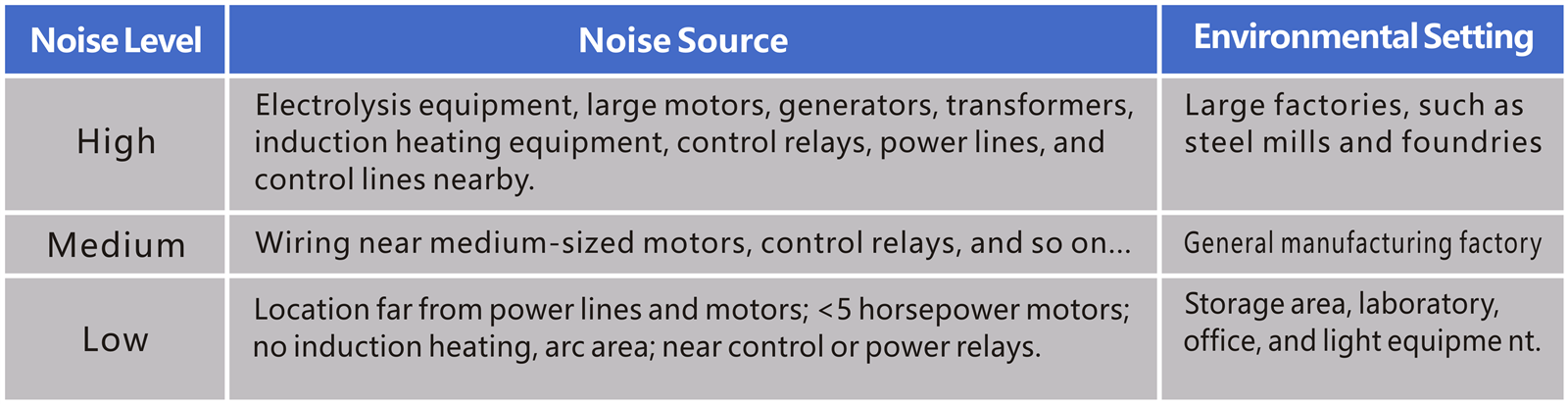
The potential impact areas of different levels of noise sources can be roughly referred to in the chart above. It's important to note that large power switches, induction heaters, large transformers, and other equipment may emit high levels of conducted noise and radiated interference. Additionally, placing signal cables near power lines can couple noise onto the signal lines.

2 What is a shielded cable?
To counteract electromagnetic noise interference on electrical lines, one very important approach is to use shielded cables.
Shielded cables consist of one or multiple conductors (insulated from each other) wrapped with a common conductive layer, which serves as the cable's shielding layer. This shielding layer is generally made of copper (or other metals like aluminum) braided strands, non-braided copper tapes in a helical pattern, or conductive polymer layers.
The shielding layer can effectively prevent electromagnetic noise interference in two ways:

On the one hand, It acts as a barrier, reflecting noise energy.
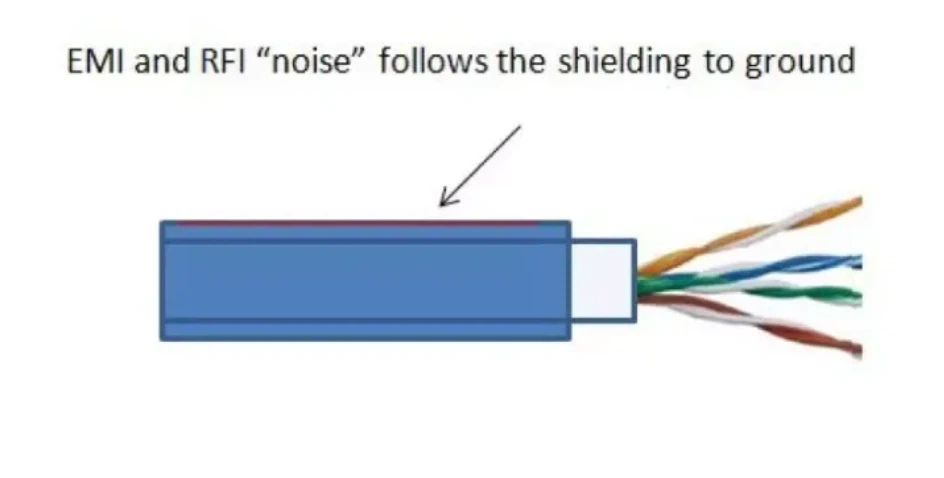
On the other hand, It can absorb noise and conduct it to the ground, serving as a return path for the noise signal.

In either case, electromagnetic noise does not directly propagate to the cable conductors. Although sometimes noise energy may still penetrate the shielding layer, it is usually significantly attenuated, making it difficult to cause interference. Therefore, whether the cable itself is a noise source or a victim, using shielding will be highly effective.

Shielded cables come in different performance levels, providing varying degrees of shielding effectiveness. The factors determining the shielding requirements are diverse, such as electrical application environment, cost considerations (i.e., why pay higher costs for more shielding?), as well as cable diameter, weight, and flexibility.
3. Two types of cable shielding:
In general, cable shielding comes in two types: metallic foil and braided mesh.

3.1 Metallic foil shielding
The metallic foil shielding typically uses a thin layer of aluminum attached to a carrier material like polyester to increase its strength and durability. It provides 100% coverage around the conductor, offering good shielding performance. However, due to its thinness, it can be challenging to work with, especially when connecting it to connectors. Therefore, the entire metallic foil shielding is not usually grounded; instead, drain wires are used to connect the shielding layer.

3.2 Braided mesh shielding
Braided mesh shielding is typically made of bare copper or tinned copper wires woven together. It provides a low-impedance grounding path for electromagnetic noise and can be easily connected through crimping or soldering when using connectors.

Braided mesh shielding does not provide 100% coverage since there are small gaps on the surface of the conductors. Depending on the tightness of the braid, it typically offers 70% to 95% coverage. However, for fixed cable installations, 70% shielding coverage is generally sufficient.

3.3 The comparison between metallic foil shielding and braided mesh shielding
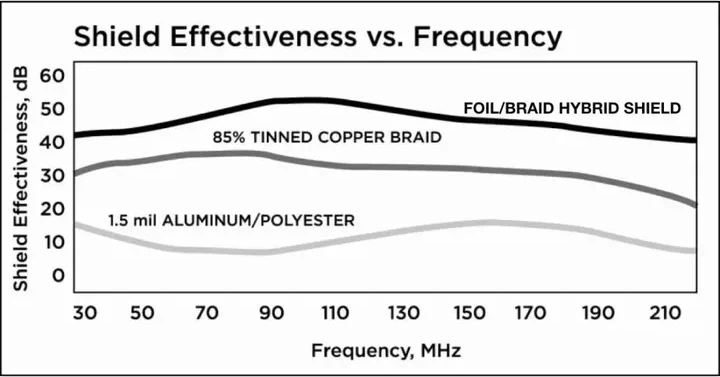
In fact, although metallic foil has higher shielding coverage, it does not necessarily mean it has superior shielding performance. This is because copper has better conductivity than aluminum, allowing the braided mesh to better conduct electromagnetic noise. Therefore, as a shielding layer, the braided mesh often exhibits better shielding effectiveness. Of course, it is evident that it also increases the cable's size and cost to some extent.

3.4 Applications of Metallic foil shielding and Braided mesh shielding
In applications with harsh noise environments, multiple layers of shielding are often required. The most common practice is to use both metallic foil and braided mesh simultaneously. For example, as mentioned in the "Twisted Pair Cable" article, in multi-core cables, each pair of conductors may have a metallic foil shielding to prevent crosstalk between twisted pairs, and the entire cable may be shielded with either metallic foil or braided mesh or both. This combination of metallic foil and braided mesh allows the two shielding techniques to complement each other, overcoming each other's limitations and providing the cable with superior shielding performance beyond what any single technique can offer.
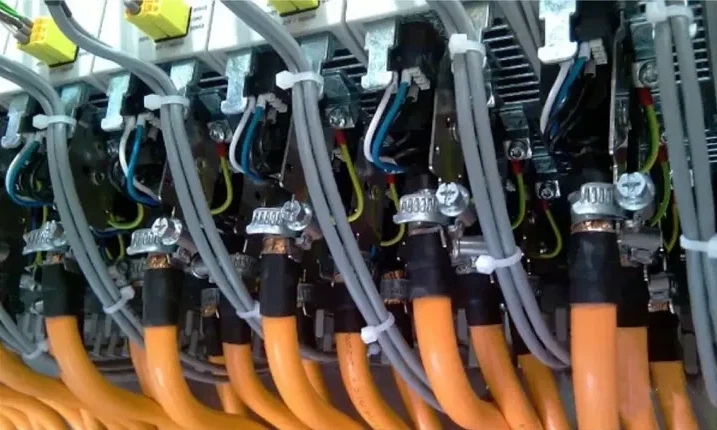
In practical applications, the purpose of shielding is to conduct induced electromagnetic noise to the ground, providing a return path for the noise signal. This is crucial, and not understanding its significance may result in ineffective shielding. Cable shielding and its termination must provide a low-impedance grounding path for electromagnetic noise. An ungrounded shielded cable will not work effectively, and any discontinuity or excessive nodes in the grounding path will increase the grounding impedance, reducing the cable's shielding performance.
4. In conclusion, here are some practical recommendations regarding cable shielding:
4.1 Ensure that the cable has sufficient shielding to meet the application requirements. In ordinary electromagnetic interference environments, using metallic foil alone should provide sufficient noise protection. In more severe noise environments, it is necessary to consider using shielded cables that combine both braided mesh and metallic foil.

4.2 Use appropriate shielded cables based on specific application environments. For cables that require repeated bending during use, it is common to use spirally wound shielding layers rather than just braided mesh. Additionally, flexible cables often avoid using only metallic foil shielding as the continuous bending of the cable may tear the foil layer.
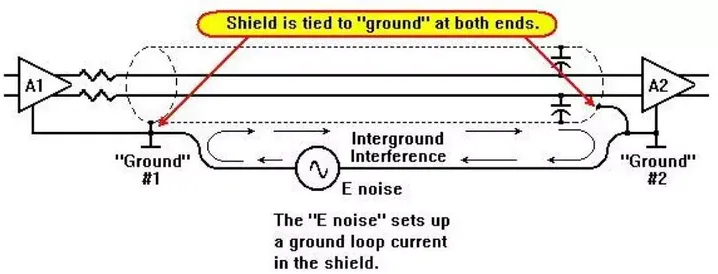
4.3 Ensure effective grounding for the devices connected by the cable. Use earth (ground) whenever possible and inspect the connection between the grounding point and the equipment. Eliminating electromagnetic noise depends on the low-impedance grounding path.
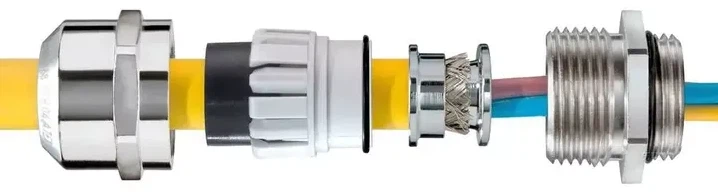
4.4 Many equipment and connector designs allow for 360° all-around shielding connections. Ensure a reliable connection between them and the cable's shielding layer. For example, many common connectors come with metal-coated plastics, die-cast zinc, or aluminum shells. Choose connectors that match the cable's shielding performance to avoid compromising the shielding effectiveness due to low standards or incurring additional costs from excessive specifications.
5. Now the question arises: Should the cable's shielding be grounded at one end or grounded at both ends? There are two ways to handle shielding grounding: single-ended grounding and double-ended grounding of the shield layer.
5.1 Single-ended grounding of the shield layer means that one end of the shielded cable is directly grounded with the metal shield layer, while the other end is left ungrounded or connected through protective grounding. In this case, there will be induced voltage between the ungrounded end of the metal shield layer and the ground, and the induced voltage is proportional to the length of the cable. However, there is no potential circulating current through the shield layer. Single-ended grounding is used to suppress potential differences and eliminate electromagnetic interference.


