

Termination Box For Fiber Optic Cable
Feb 18, 2025
Leave a message
In this article, we will introduce everything you must know about termination box for fiber optic cable,
In network cabling, fiber optic cables are typically used for connections between outdoor buildings, while optical fibers are used inside buildings. So how are outdoor fiber optic cables' signals converted to indoor Ethernet signals? What equipment is involved? What are their functions? How do they relate to each other? Before addressing these questions, we first need to understand the following terms:
1. Terms Explanation
Pigtail: Used inside termination boxes to connect the optical fibers in the fiber optic cable to pigtails or other components. Through termination box couplers (adapters), pigtails and patch cords are connected.
Fiber patch cord: A fiber patch cord has connectors on both ends and is used to connect pigtails to devices.
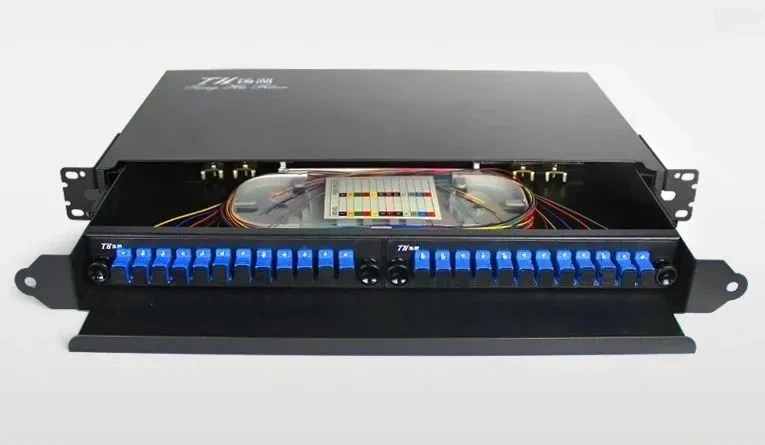
Termination box for fiber optic cable: A box at the end of a fiber optic cable installation that houses and facilitates the splicing of the fiber optic cable with pigtails.
Optical fiber coupler: A device used for active connections between two optical fibers or pigtails, commonly referred to as a flange (a type of adapter).
Optical fiber termination box: This serves as the termination point of a fiber optic cable. One end connects to the fiber optic cable, and the other end connects to a pigtail. It essentially splits one fiber optic cable into individual fibers.
Optical fiber splice box: A device used to connect two fiber optic cables into one longer cable.
The optical fiber termination box and optical fiber splice box serve distinct purposes and are not interchangeable. The connection between a fiber optic cable and an Optical Line Terminal (OLT) is achieved through an optical fiber termination box, meaning only pigtails can be inserted into OLTs.
Coupler: A device that can only connect two pigtails, available in various interface types such as SC/PC or FC/PC. Fiber optic cables and pigtails are fused together using a fusion splicer, forming a fixed connection.
Termination Box For Fiber Optic Cable vs. Splice Box:
Key differences include:
The former is for splicing fiber optic cables with pigtails.
The latter is for splicing two fiber optic cables together.
Junction Box vs.Termination Box For Fiber Optic Cable:
Connection Box are fully sealed and waterproof but do not secure pigtails in place.
Terminal boxes are not waterproof but can fix both fiber optic cables on one side and pigtails on the other side.
Pigtail vs. Fiber Patch Cord:
A pigtail has only one end with an active connector.
A fiber patch cord has active connectors on both ends, available in various interface types that require different couplers. Patch cords can be cut into two parts to function as pigtails.
2. Connection Relationships Between Fiber optic Cables, Termination Boxs For Fiber Optic Cable, and Pigtails:
Outdoor fiber optic cables connect to a termination box where their fibers are fused with pigtails, which are then led out via patch cords.
Patch cords connect to an optical transceiver that converts optical signals into electrical signals.
The output from the transceiver is an electrical signal transmitted via twisted-pair cables that can connect to RJ-45 ports on network devices. At this point, the conversion from optical signals to electrical signals is complete.
Note: Many modern network devices come equipped with optical ports (fiber interfaces). However, if these ports are not equipped with modules (functionally similar to transceivers), they cannot be used.
3. Functions of Fiber optic Cables,Termination Box For Fiber Optic Cable, and Pigtails:
Purpose of the Termination Box For Fiber Optic Cable: The termination box is used to terminate and manage fiber optic cables, connecting the fibers within the fiber optic cable to pigtails. Inside the fiber optic cable terminal box, fiber optic cables entering the termination box can contain multiple cores. For example, a 4-core fiber optic cable (containing 4 fibers) can be spliced in the termination box to connect up to 4 pigtails, resulting in 4 jumpers extending outward. If only 2 fibers are spliced, then only 2 jumpers will extend outward.
Pigtail: A pigtail has a connector on one end and an exposed fiber core on the other end. Through fusion splicing, it connects with other optical fiber cores.

The primary function of a pigtail is to connect one end of an optical fiber to another component or device. One end of the pigtail is fusion-spliced with the optical fiber core, while the other end connects to an optical transceiver or fiber module using a specialized connector, creating an optical data transmission pathway. Pure pigtails are generally not sold directly; instead, we typically use fiber patch cords (as shown in the diagram), which can be cut in half to create pigtails.
ST, SC, and FC fiber connectors were originally developed as standards by different companies. While their performance is similar, each has its advantages and disadvantages. Here's a detailed breakdown:
The ST connector locks into place by inserting it and twisting it half a turn; however, it's prone to breaking easily.
The SC connector offers simple plug-and-play functionality but can easily become loose.
The FC connector is commonly used in telecommunications networks and uses a screw-on nut to secure it to an adapter. It's known for its reliability and dust resistance but takes slightly longer to install.
MTRJ-type fiber jumpers are made up of two precision-molded plastic connectors and an optical cable. The connectors feature precision plastic external components with a push-pull latch mechanism for easy insertion and removal. They're ideal for indoor use in telecommunication and data network systems.

4. Types of Fiber Interface Connectors (ST/SC/FC):
Types of Fiber Optic Interface Connectors
The types of fiber optic interface connectors include TF-FC, TF-ST, TF-FC/APC, TF-SC/APC, and TF-SC connectors, which specifically connect to optical modules. There are several types, and they are not interchangeable. Those unfamiliar with fiber optics might think that the connectors for GBIC and SFP modules are the same type, but this is not the case. SFP modules use LC connectors, while GBIC modules use SC connectors. Here's a detailed explanation of some commonly used fiber optic connectors in network engineering:
① FC-type fiber optic connector: The external reinforcement uses a metal sleeve, and the fastening method is a screw-on mechanism. It is typically used on the ODF side, most commonly on distribution frames.
② SC-type fiber optic connector: This connector is for GBIC optical modules. It has a rectangular housing and uses a push-pull latch mechanism that doesn't require rotation (commonly found on routers and switches).
③ ST-type fiber optic connector: ST-type connectors are typically used for 10Base-F connections. They have a round housing, and the fastening method uses a screw-on mechanism (commonly used in optical distribution frames).
④ LC-type fiber optic connector: This is the connector for SFP modules. It features an easy-to-use modular jack (RJ) latch mechanism (commonly used on routers).
⑤ MT-RJ: A square-shaped integrated transceiver connector that supports dual-fiber transceivers (commonly used in compact setups or devices requiring space efficiency).

5. Overview of Different Fiber Optic Interface Types
5.1 Fiber Optic Connectors:
FC: Round type with threads (commonly used in distribution frames).
ST: Push-in round type.
SC: Push-pull square type (most commonly used on routers and ethernet switches).
PC: Flat polished with slight curvature (spherical surface).
APC: Polished at an 8-degree angle with a slightly curved end-face.
MT-RJ: Square type, a single connector combining dual-fiber transmission and reception (used on Huawei 8850).

5.2 Optical Modules:
Typically support hot-swapping.
GBIC (Giga Bitrate Interface Converter): An older transceiver module where fiber optic interfaces are mostly SC or ST types.
SFP (Small Form-factor Pluggable module): Uses LC-type fiber optic connectors.
5.3 Types of Optical Fibers Used:
Single-mode:
L: Operating wavelength of 1310nm.
Long-distance single-mode (LH): Operating wavelengths of 1310nm, 1550nm.
Multi-mode:
MM: Operating wavelength of 850nm.
Labels such as "SX/LH" indicate compatibility with both single-mode and multi-mode fibers. SX is typically used for short-range applications, while LH supports long-distance connections.
In the labeling of pigtail connectors, labels such as "FC/PC" and "SC/PC" are frequently used, with the following meanings:
The part before the "/" indicates the connector model of the pigtail. For example:
The "SC" connector is a standard square-shaped connector made of engineering plastic, known for its durability, including high-temperature resistance and oxidation resistance. SC connectors are generally used for optical interfaces on transmission equipment.
The "LC" connector is smaller than the SC connector, making it suitable for high-density installations.
The "FC" connector is a metal connector, typically used on the ODF side; metal connectors like FC offer higher durability and can endure more plug-and-unplug cycles compared to plastic ones.
Apart from the three types mentioned above, there are also other connector types such as MTRJ, ST, MU, etc., which are used in specific applications depending on system requirements.
The part after the "/" specifies the fiber optic connector end-face processing technology or polishing method:
"PC" is the most widely used in telecom operator equipment, featuring a flat but slightly convex end-face design.
"UPC" provides lower insertion loss compared to PC and is generally used for equipment with special requirements. For instance, some foreign manufacturers use FC/UPC jumpers inside ODF racks to improve ODF device performance metrics.
ODF racks (Optical Distribution Frames) are used for organizing fiber optic cables in telecom networks.
6. Fiber optic Connectors
Fiber optic connectors are devices used for removable connections between optical fibers. They precisely align the end faces of two optical fibers to maximize the transfer of light energy from the transmitting fiber to the receiving fiber while minimizing their impact on system performance when inserted into an optical link. This is the fundamental requirement for fiber optic connectors. Fiber optic connectors can also influence the reliability and performance of optical transmission systems.
These connectors can be classified based on their transmission medium into common types like single-mode and multi-mode connectors for silicon-based fibers, as well as connectors designed for plastic optical fibers. They can also be classified by connector head structure into types such as FC, SC, ST, LC, D4, DIN, MU, MT, among others. Below are some of the more commonly used fiber optic connectors:

(1) FC-Type Connector
This connector was first developed by Japan's NTT. FC stands for Ferrule Connector, indicating that its external reinforcement uses a metal sleeve and its fastening mechanism employs a screw thread. Initially, FC-type connectors used ceramic ferrules with flat end faces for mating. This type of connector has a simple structure that is easy to operate and manufacture but is sensitive to dust on the fiber end face and susceptible to Fresnel reflections, making it challenging to achieve high return loss performance. Later improvements introduced ferrules with spherical end faces (PC) while retaining the same external structure, leading to notable improvements in insertion loss and return loss performance.
(2) SC-Type Connector
This connector was developed by Japan's NTT Corporation. Its housing is rectangular, and its ferrule and coupling sleeve dimensions are identical to those of the FC type. The ferrule end face typically uses PC or APC polishing methods. Its fastening mechanism utilizes a push-pull locking mechanism that eliminates the need for rotation. This type of connector is cost-effective, easy to plug and unplug, exhibits low insertion loss variation, has high compression resistance, and supports high-density installations. ST and SC interfaces are two types of fiber optic connectors; for 10Base-F connections, ST-type connectors are generally used, while for 100Base-FX connections, SC-type connectors are more common. In ST connectors, the core is exposed, whereas in SC connectors, the core is housed within the connector.
(3) Biconic Connector
The most representative product in this category was developed by Bell Laboratories in the United States. It consists of two precision-molded cylindrical plugs with ends shaped like truncated cones and a coupling assembly containing a biconical plastic sleeve.
(4) DIN47256-Type Connector
This connector was developed in Germany. It features ferrules and coupling sleeves with structural dimensions identical to those of FC-type connectors but employs PC-polished end faces. Compared to FC-type connectors, it has a slightly more complex structure with an internal metal spring mechanism to control pressure, protecting the end face from damage caused by excessive mating force. Additionally, this type offers higher mechanical precision and lower insertion loss values.
(5) MT-RJ Connector
The MT-RJ connector originated from NTT's development of MT connectors and includes a latch mechanism similar to RJ-45 LAN electrical connectors. It uses guide pins on either side of a small sleeve to align fibers. Designed with dual-fiber alignment (spaced 0.75mm apart) at its end face for ease of connection with optical transceivers, it is a next-generation high-density fiber optic connector designed primarily for data transmission.
(6) LC-Type Connector
The LC connector was developed by Bell Labs and features an easy-to-operate modular jack (RJ) latch mechanism. Its ferrule and sleeve dimensions are half those used in standard SC or FC connectors-measuring 1.25mm-enabling higher density in fiber distribution frames. Currently dominating single-mode SFF applications, LC-type connectors are also seeing rapid growth in multi-mode usage.
(7) MU-Type Connector
The MU (Miniature Unit Coupling) connector is one of the smallest single-core fiber optic connectors in the world, developed by NTT. It uses a 1.25mm diameter ferrule combined with a self-retention mechanism that supports high-density installations. Using this 1.25mm ferrule diameter as a foundation, NTT has developed an MU connector series that includes receptacle-type connectors for optical cable connections (MU-A series), backplane connectors with self-retention mechanisms (MU-B series), and simplified receptacles for LD/PD module connections (MU-SR series). As optical networks evolve toward higher bandwidths and capacities with widespread adoption of DWDM technology, demand for MU-type connectors is expected to grow significantly.


